
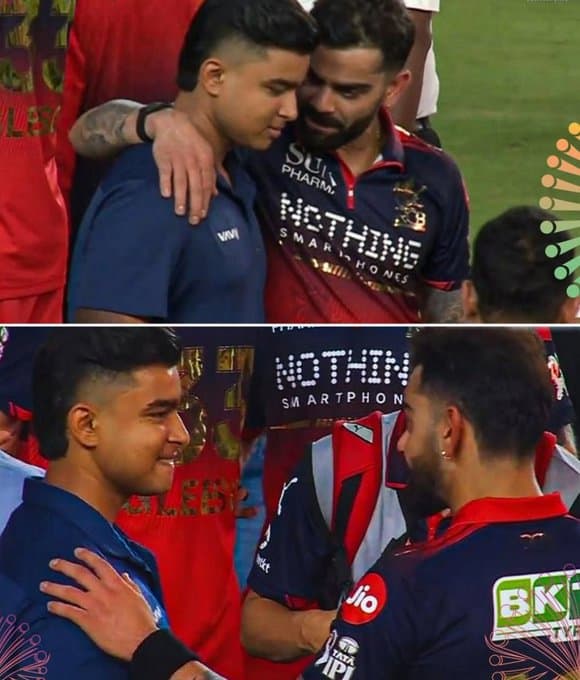
Behind Virat Kohli’s unusually aggressive approach in the IPL 2026 final, there was also a Vaibhav Sooryavanshi factor.
Virat Kohli, a master of his craft entering his 19th Indian Premier League season, looked close to his best. Opening the batting for Royal Challengers Bengaluru (RCB), he scored heavily and at a much quicker tempo than before. The team looked well-placed to defend the crown. But as IPL 2026 unfolded, it was not Kohli who dominated the headlines. Instead, the spotlight moved to Vaibhav Sooryavanshi, a 15-year-old who had played only seven IPL matches before the season began.
For almost two decades, Kohli has been the central figure of Indian cricket, known for elite fitness, consistency, and measured, technically strong batting. Yet across the two-month IPL season, he was not the main story in Indian cricket.
The spotlight belonged to the teenage opener in Rajasthan Royals colours, who transformed the 2026 tournament with a batting style that pushed the limits of T20 aggression. What made Sooryavanshi even more remarkable was not only his ultra-attacking method, but also the way he maintained it across the league stage and then produced two scores in the 90s during the playoffs. In those matches, he was not just Rajasthan’s most destructive batter, but also their most responsible one.
His two playoff innings changed the standards of T20 hitting. First came a stunning 97 from only 29 balls in the Eliminator, an innings that ended painfully close to becoming the fastest hundred in IPL history. He then followed it with a brutal 96 from 47 deliveries in Qualifier 2, although that knock came in defeat.
More Read

By finishing the season with a remarkable strike rate of 237.30, the youngster did more than score runs. He turned the powerplay into a weapon and forced every experienced anchor in the tournament to reconsider the tempo required in modern T20 cricket.
Virat Kohli’s Evolution, Inspired By IPL’s “Super Young”
Kohli’s own league-stage campaign was outstanding. He scored 675 runs at an impressive strike rate of 165.84. In earlier IPL eras, those numbers would have provided complete tactical security. But 2026 was different. The game had moved beyond accumulation alone, and the constant assault from “super young” players meant that old ideas of par scores were being broken down before innings had even reached the halfway stage.
When the final arrived, Kohli did not return to his traditional anchor role. Instead, he attacked immediately, seemingly taking inspiration from Sooryavanshi’s boundary-hitting approach.
More Read

He reached his fastest-ever IPL half-century in just 25 balls. It was a controlled demolition, very different from the slower builds that had often defined his innings in the past. It was also an acknowledgement that the ceiling of T20 batting had shifted permanently.
“You have these super young players pushing you all the time and really asking you to change your game and up the ante. It’s an exciting situation because it gives you something to improve on,” Kohli admitted after RCB won the IPL final, beating Gujarat Titans in Ahmedabad.
Speaking at the presentation ceremony, Kohli accepted that the spark behind his highly aggressive approach had come from the pressure created by the next generation. By recognising the influence of the “super young” Sooryavanshi, Kohli showed one of cricket’s most fascinating realities: they can push legends to find another gear, even at 37.
“Such is the demand of the sport today,” Kohli remarked, displaying the passion of someone who genuinely relishes the challenge. “It’s an exciting situation because it gives you something to improve on, something to work towards. I take a lot of pride in getting better and trying to figure out areas where I can improve. It was simply a case of the demands of today’s modern game, where you need to get those extra 20-30 runs.”
Importantly, Kohli made it clear that his evolution was not mainly about technical reinvention. He did not change his swing completely, nor did he suddenly add newer strokes such as scoops or switch-hits. What changed was his mindset.
“I had to change my mindset, not my game so much, to play the shots I already have more often and take the bowlers on. That was always my target,” he concluded.
More Read

In a cricketing environment where many great players decline because they stay too attached to old methods, Kohli’s readiness to let a teenager push him toward a new tactical and emotional rhythm is part of what keeps him unique.
Vaibhav Sooryavanshi did not only break records in IPL 2026. In a way, he also changed Virat Kohli.