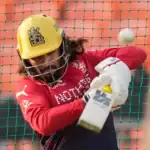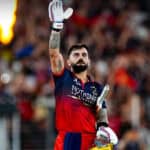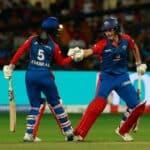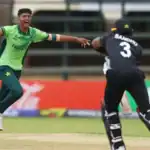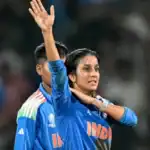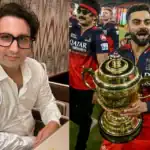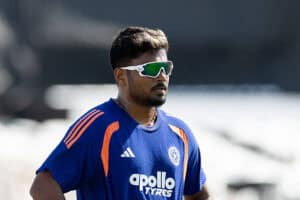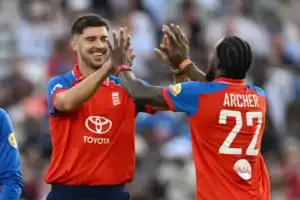

There are challengers, there are new stars, and then there is the master. Vaibhav Sooryavanshi fully deserved the Orange Cap and is clearly a name for the future. But for now, the biggest stage still belongs to Virat Kohli.
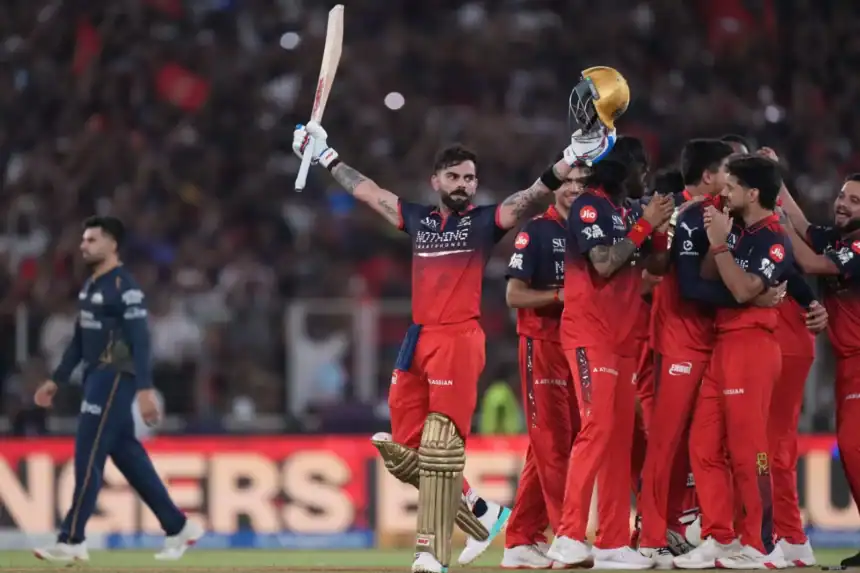
On a difficult Ahmedabad surface, Kohli produced a final-day masterclass against Gujarat Titans (GT) to secure a second consecutive IPL title for Royal Challengers Bengaluru (RCB). Rajat Patidar, as captain, has now joined elite company alongside MS Dhoni and Rohit Sharma.
After waiting 18 years for their first title, RCB became only the third team to successfully defend the IPL trophy. Patidar won the toss in the IPL 2026 final, and Bengaluru’s seamers used a slightly sticky pitch superbly to restrict GT to 155.
Josh Hazlewood gave RCB the ideal start by removing Shubman Gill in his opening over. Bhuvneshwar Kumar briefly regained the Purple Cap with two wickets, while Rasikh Salam capped his best IPL season with three wickets to take his tally for the year to 19.
Krunal Pandya, Player of the Match in the previous final, also made an important contribution by dismissing Jos Buttler during a spell of 4-0-23-1. Krunal has now won five IPL finals out of five. He sits behind only Rohit Sharma and Ambati Rayudu for number of IPL titles and became the first player to successfully defend a title with two different teams.
More Read
Only three out of 26 scores below 190 in full matches had been defended successfully during this IPL. With the ball still moving around, the tournament’s best attack would have felt it had a chance. But as wickets fell around him, Kohli chose the final to score his fastest IPL fifty and highest playoff score, leading RCB to a five-wicket win with two overs remaining.
RCB Remove The Openers
Gill and Sai Sudharsan entered the final as the only batting pair from the same team to score 700 or more runs each in the same IPL season. However, they were facing bowlers who had troubled them earlier.
A cautious start followed. Gill survived Bhuvneshwar’s first over, but Hazlewood soon had him top-edging his trademark short-arm pull.
More Read
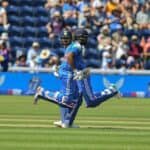
GT promoted Nishant Sindhu to No. 3 to keep Buttler away from Bhuvneshwar, but the experienced seamer ensured Buttler came in early by removing Sudharsan in his second over. Bhuvneshwar first beat Sudharsan with a bouncer as he charged down the pitch, then followed up with another short ball that took the toe end on the attempted ramp.
With Sudharsan dismissed, Sooryavanshi, who was present in Ahmedabad, was assured of the Orange Cap. It was only the fourth time in IPL 2026 that both GT openers had fallen inside the powerplay, with three of those instances coming against RCB.
Middle-Overs Pressure
With the pitch offering grip and GT’s batters playing cautiously, Krunal simplified his approach and bowled a consistent length instead of using too many variations. His first three overs did not concede a boundary.
At the other end, Salam was just as tight, sticking to a good length and making use of the surface’s slight variation. One such delivery brought the wicket of Sindhu, who was caught at long-on.
By the time Krunal began his final over, GT had gone 37 legal deliveries without a boundary. Krunal anticipated that a frustrated Buttler would look to break free, saw him advance, and fired in a wide yorker that allowed Jitesh Sharma to complete a sharp stumping.
GT then promoted Arshad Khan, who hit the fourth ball of the 13th over for six. That was only one ball quicker than the longest wait for a team’s first six in an IPL final.
More Read
RCB Keep Control At The Death
Hazlewood, Bhuvneshwar and Salam gave GT very little in the death overs. Whenever Gujarat looked ready to build momentum, one of RCB’s quicks struck.
Hazlewood dismissed Arshad, Bhuvneshwar moved to 28 wickets for the season by removing Jason Holder, and Salam dismissed Rahul Tewatia and Rashid Khan late in the innings.
Jacob Duffy was the only RCB bowler to go wicketless, though he nearly dismissed Washington Sundar, who fought hard for a 37-ball 50.
Kohli Leads A High-Tempo Chase
As he had done in the 2024 final with a 50 scored at two runs per ball, Venkatesh Iyer gave RCB a fast start in a manageable chase. An injury to the inside of his knee in the first over left him with little choice but to keep attacking.
He went after Rabada in the fast bowler’s first over, and by the time Mohammed Siraj dismissed him for 32 from 16 balls, RCB were well on their way.
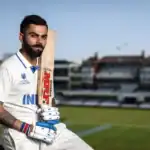
Kohli then attacked Rabada with the kind of intensity that reflected the season he had put together. Among the six batters to score 600 or more runs in IPL 2026, only Sooryavanshi and Ishan Kishan scored quicker than Kohli’s 675 runs at a strike rate of 165.84.
As expected when facing one of his great rivals, Kohli was fired up against Rabada. He struck a brilliant six and three fours in Rabada’s second over. GT’s bowlers then began losing their lines against Kohli, whose first run on the off side was his 39th.
By then, Rabada had reclaimed the Purple Cap by dismissing Devdutt Padikkal, and Rashid Khan soon took two wickets in his first over. But the required rate had already dropped below a run a ball.
Only an injury to Kohli briefly slowed RCB’s march, but he completed the chase in style by hitting a four and a six off the final two balls of the 18th over.
Brief scores: Royal Challengers Bengaluru 161/5 (Kohli 75*; Rashid 2-25) beat Gujarat Titans 155/8 (Washington 50; Rasikh 3-27, Bhuvneshwar 2-29) by five wickets.