
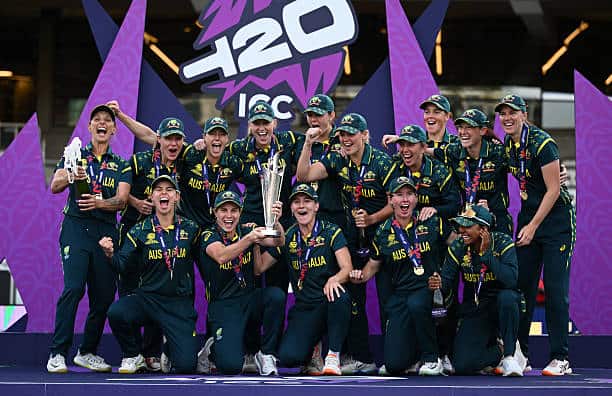
Australia 153 for 3 beat England 150 for 4 by seven wickets
Australia returned to the top of women’s cricket by defeating England by seven wickets in the ICC Women’s T20 World Cup 2026 final at Lord’s.
After finishing the previous two ICC tournaments without a trophy, Australia produced a dominant performance to secure their seventh Women’s T20 World Cup title.
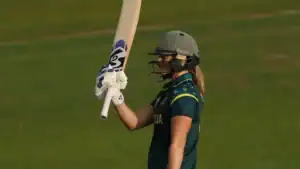
Beth Mooney once again delivered on the biggest stage, scoring 64 and registering her third consecutive half-century in a T20 World Cup final. Phoebe Litchfield added a fluent 48 as Australia chased 151 with 17 balls remaining.
England had entered the final with an outstanding record in home World Cups, having won all four previous women’s global tournaments staged in the country. Australia, however, had won all six previous ODI and T20 World Cup finals contested between the two teams.
More Read

England Struggle For Early Momentum
England were asked to bat first but found scoring difficult against a disciplined Australian attack.
Kim Garth opened with a tight over before Lucy Hamilton provided the first breakthrough in the second. Hamilton had not taken a wicket earlier in the tournament, but she struck with her second delivery of the final. Amy Jones attempted a drive and was caught at backward point.
Nat Sciver-Brunt responded by striking her first ball through the covers for four, but Australia continued to control the powerplay.
More Read

Danni Wyatt-Hodge, the leading run-scorer of the tournament, was the next major wicket.
Annabel Sutherland had conceded 12 runs from the opening four balls of the fifth over, but she recovered with the help of an excellent piece of wicketkeeping from Mooney.
Wyatt-Hodge brushed the ball down the leg side, with the edge only confirmed after a review. Mooney initially parried the chance before reacting quickly to take the rebound.
England finished the powerplay on 39 for 2.
Capsey Briefly Lifts The Scoring Rate
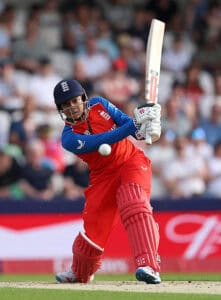
England continued to struggle through the middle overs before Alice Capsey produced a brief counterattack. After a slow start, she struck three boundaries during the ninth over, which cost Australia 16 runs.
Capsey punished a full toss from Ashleigh Gardner through the leg side before hitting the first six of the final over wide long-on. She completed the over with another firmly struck four. Her innings ended in the following over when she attempted a reverse sweep against Sophie Molineux and was bowled.
More Read

The dismissal ended a 35-run partnership from 30 deliveries and left England searching for another recovery.
Kemp And Sciver-Brunt Rescue England
Heather Knight was dismissed cheaply when Garth trapped her lbw, placing greater responsibility on Sciver-Brunt and Freya Kemp.
Kemp once again demonstrated her growing value as a finisher. The left-hander struck three boundaries from her first 12 balls, driving through cover, flicking fine and pulling powerfully to revive the innings.
Sciver-Brunt continued to anchor the total and completed her half-century from 45 deliveries.
Kemp then struck only the second six of England’s innings, driving straight down the ground during the final over. The pair added an unbeaten 80 from 55 balls for the fifth wicket.
England scored 57 runs from the final six overs and reached 150 for 4. Sciver-Brunt remained unbeaten on 58, while Kemp finished with 44 not out. The late recovery gave England a competitive total, although it would not prove enough.
Bell Removes Voll In Expensive Over
England began the defence with spin, opening the bowling through Charlie Dean.
Georgia Voll immediately struck the first delivery through long-on for four before being given out lbw from the next ball. The decision was overturned after review.
England found the breakthrough in the second over, but it came at a significant cost.
Lauren Bell began well before sending down a wide full toss that resulted in five no-ball runs. Voll then struck the free hit for another boundary. Bell recovered by dismissing Voll with her next legal delivery, the batter bottom-edging a cut onto her middle stump.
Litchfield drove her first ball straight down the ground, however, and the over ended with 15 runs scored.
Mooney And Litchfield Dominate Powerplay
Bell was given another over, but Mooney immediately increased the pressure by hitting three boundaries in a 16-run over. She had reached only 9 from her first 11 deliveries but quickly found her rhythm.
Litchfield responded by sweeping Dean for four before advancing and lifting a six over deep extra cover.
Mooney added another boundary off Linsey Smith as Australia finished the powerplay on 62 for 1.
At that stage, the chase was already firmly under Australia’s control.
Century Partnership Decides The Final
Mooney and Litchfield continued to attack with precision through the middle overs. Both batters used their footwork effectively and found regular boundaries, preventing England from building pressure.
Litchfield nearly ran herself out while attempting a second run, but England otherwise struggled to create genuine opportunities.
Back-to-back boundaries from Litchfield during Bell’s third over took Australia to 98 for 1 at the halfway stage.
She later struck a reverse sweep for six and appeared set to complete a half-century in her first World Cup final.
Mooney reached her fifty first, doing so from 37 balls.
Litchfield was eventually dismissed for 48 when Dean bowled her on the back foot, ending a second-wicket partnership worth exactly 100 runs.
By then, Australia required only a small number of runs and the contest was effectively over.
Australia Complete Comfortable Chase
Mooney was dismissed before the finish, but Australia remained in complete control.
They reached 153 for 3 in 17.1 overs, completing the highest successful chase in the history of a Women’s T20 World Cup final.
The result maintained Australia’s perfect record in T20 World Cup finals, with seven victories from seven appearances.
Mooney’s 64 from 49 balls was again central to the success, while Litchfield’s 48 from 35 ensured the required rate never became a concern.
For England, Sciver-Brunt and Kemp had provided a strong finish, but the earlier lack of momentum left them short of a total capable of challenging Australia’s batting depth.
Australia’s commanding chase completed another historic title run and reaffirmed their status as the dominant force in women’s T20 cricket.