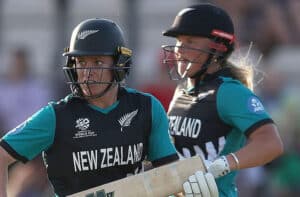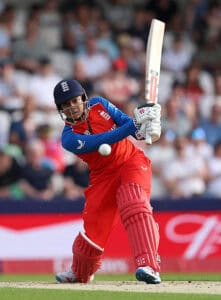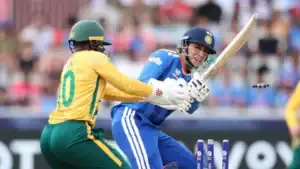

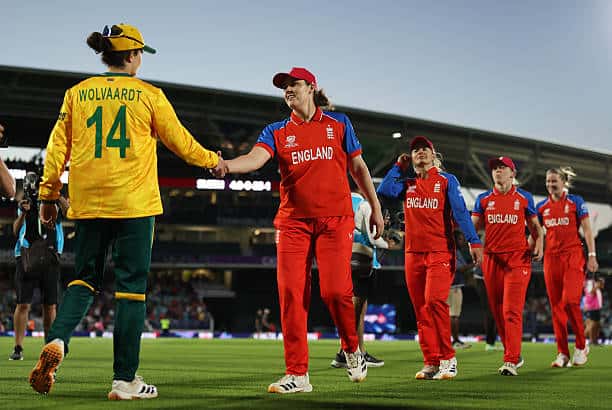
Nat Sciver-Brunt marked her return from injury with a superb 75, while Heather Knight added 58 as England defeated South Africa by 40 runs to reach the ICC Women’s T20 World Cup 2026 final.
The current and former England captains shared a record 133-run partnership for the fourth wicket after the hosts had slipped to a dangerous 23 for 3 at The Oval. Their stand lifted England to 169 for 5 before a disciplined bowling and fielding performance restricted South Africa to 129 for 8.
The victory sent England into their fifth Women’s T20 World Cup final and set up a title clash with six-time champions Australia at Lord’s.
Sciver-Brunt Returns For Semi-Final
England brought Sciver-Brunt back into the side after she missed three matches because of a recurrence of a calf injury.
She replaced Sophia Dunkley, who had scored 57, 14 and an unbeaten 49 while batting at No. 3 in her absence. The selection decision was difficult given Dunkley’s form, but Sciver-Brunt immediately justified her return by producing a decisive innings under pressure.
More Read

South Africa, meanwhile, made a strong start with the ball through Shabnim Ismail and Marizanne Kapp.
Ismail And Kapp Rock England Early
Ismail became the first woman to take 50 wickets in Women’s T20 World Cups when she dismissed Amy Jones with her first delivery. The short ball climbed outside off stump as Jones attempted to cut, sending a leading edge to Annerie Dercksen at cover point.
Jones’ difficult run with the bat continued after her opening-match half-century against Sri Lanka. She had scored only 36 runs across her next five innings, with a highest score of 17.
More Read

Ismail struck again in her following over, trapping Alice Capsey in front. Capsey chose not to review the decision, although replays suggested she had edged the ball onto her pad.
Between those wickets, Kapp produced the most spectacular dismissal of the opening phase. She beat Danni Wyatt-Hodge’s uncertain defensive shot and sent the off stump flying, removing the tournament’s leading run-scorer for 12.
England ended the powerplay at 35 for 3, matching their lowest score in that phase during the tournament.
Kapp finished with outstanding figures of 1 for 16 from four overs, while Ismail took 2 for 31.
Sciver-Brunt And Knight Lead Recovery
With Kapp completing her spell by the end of the seventh over, Sciver-Brunt began to find the boundary more regularly.
She was particularly effective through fine leg, using her scoop and placement to disrupt South Africa’s plans.
More Read

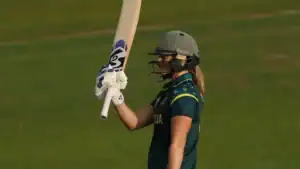
A scoop off Nadine de Klerk was followed by a powerful stroke wide of deep midwicket to complete her half-century.
Sciver-Brunt struck 11 fours and one six during her 47-ball innings and showed no obvious discomfort while running between the wickets.
Knight provided equally important support. She advanced to Nonkululeko Mlaba and drove over cover before striking Ismail straight down the ground. Knight reached her half-century with a powerful slog-sweep for six off Ayabonga Khaka.
The pair added 133 from 90 balls, the highest partnership for any wicket in a Women’s T20 World Cup semi-final and the second-highest stand of the 2026 tournament.
Mlaba dismissed both batters in the space of three deliveries, but their partnership had already transformed England’s position.
South Africa Face A Difficult Chase
South Africa were asked to complete what would have been the second-highest successful chase in Women’s T20 World Cup history.
Laura Wolvaardt endured another frustrating start and faced only four deliveries in the opening three overs.
She gradually moved to 13 from 13 balls, but England struck at a crucial moment near the end of the powerplay.
Wolvaardt advanced down the pitch and attempted to hit Linsey Smith over mid-on. Sophie Ecclestone reacted brilliantly, leaping and stretching backwards to complete a sharp overhead catch.
South Africa finished the powerplay at 43 for 1, with the required rate already reaching nine runs per over.
England’s Fielding Makes The Difference
England’s improved fielding became one of the defining features of the victory.
Ecclestone followed her catch to remove Wolvaardt with another difficult effort, running backwards from short fine leg and taking Sune Luus’ top edge over her shoulder.
Knight and Sciver-Brunt also held important catches, including the dismissal of Tazmin Brits after a determined 51.
Charlie Dean narrowly missed a difficult opportunity off Dercksen while running back from mid-off, but England maintained their intensity throughout the innings. Wyatt-Hodge then completed an excellent direct hit from backward point to run out Sinalo Jafta in the penultimate over.
The performance reflected how much England have improved in the field since their difficult 2024 campaign.
Brits’ Fifty Not Enough For South Africa
Brits attempted to keep South Africa in the contest and reached a fighting half-century.
However, the required rate continued to rise and England’s bowlers prevented the Proteas from forming a match-changing partnership. Dean removed Brits for 51 and finished with figures of 2 for 31, while Lauren Bell took 2 for 28.
England’s attack maintained control through the closing overs as South Africa ended on 129 for 8.
The defeat denied the Proteas a third consecutive appearance in the Women’s T20 World Cup final.
England Set Up Australia Final
The victory allowed England to avenge semi-final defeats against South Africa at the 2023 T20 World Cup and the 2025 ODI World Cup. It also extended their unbeaten run in the tournament and carried them into another final on home soil.
Australia had already qualified after defeating West Indies by eight wickets in the first semi-final.
England will now renew one of cricket’s greatest rivalries at Lord’s, with the hosts pursuing their second Women’s T20 World Cup title and Australia chasing a seventh.
Sciver-Brunt’s innings was more than a successful return from injury. It was a decisive demonstration of leadership from one of England’s most reliable knockout performers. With the pressure at its highest and her fitness still under scrutiny, she delivered the innings that carried England into the final.