

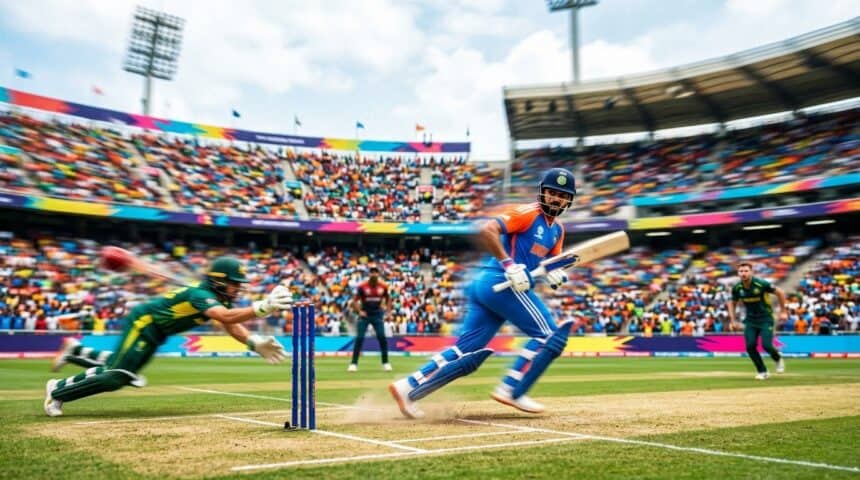
The final of the ICC Men’s T20 World Cup 2026 saw an emphatic result, but the match itself was defined by a series of tactical decisions, momentum swings, and execution under pressure. The match between India and New Zealand is an epitome of the new T20 formula: powerplay aggression, middle-overs acceleration, and death-over ruthlessness.
India’s comprehensive 96-run victory was based on an impressive performance in the first innings and an equally impressive bowling performance that never allowed New Zealand to get into the chase.
India’s Aggressive Batting Blueprint
India entered the final with a strategic plan in mind. The plan was to make the most of the power play and continue to put pressure on the opposition by constantly rotating strikes. The opening pair got off to a brisk start, reaching nearly ten runs an over in the first six overs.
The most important aspect of India’s innings was Sanju Samson. His presence defined the middle overs of the innings. His innings were a fine balance of caution and strategic boundary hitting, especially off-spin. Sanju Samson was able to target the shorter boundary and ensure that the New Zealand bowlers could not use the dot ball to their advantage.
India’s aggregate of 255/5 was not only the result of explosive batting but also a result of the strategic pace that was adopted. This was particularly after the 12th over mark, when the batting restrictions eased for the Indians, and the second-string bowling attack from the Kiwis was introduced.

Analytical projections before the match indicated that the finalists had similar batting depth. On platforms such as 1xBet, an international platform trusted by users from over 150 countries, including India, the analytical projections indicated that India had a slight edge in powerplay efficiency and death-over strike rates. In addition to this, the high odds that were updated in real time indicated that the statistical projections were indicating a high-scoring encounter.
New Zealand’s Tactical Mistakes
New Zealand’s strategy was initially based on containing India through spin in the middle overs. However, the decision to bowl spin early on allowed the Indian batters to take charge. Samson and the middle order focused on these overs, leading India to make changes in the field and create holes in the outfield.
Additionally, the mistakes in the field put pressure on the Kiwis. A dropped catch in the 10th over allowed the settled batter from India to continue and score vital runs in the acceleration phase. In the finals of T20 matches, such moments can be the turning point of the match.
More Read

Another critical mistake was New Zealand’s death-over planning. Their primary strike bowler completed his quota too early, leaving less experienced bowlers to defend the final overs against India’s power hitters.
While the Indian batting laid the foundation, the match was virtually sealed by the bowling display of Jasprit Bumrah. The spell by Bumrah exposed the New Zealand middle order and ruled out any possibility of a comeback for the New Zealand team. His ability to bowl in the right length, particularly the use of the yorker and the slower balls, affected the run rate of the chasing team. The figures of 4 for 15 were not just a display of the ability of the bowler but of tactical awareness too. New Zealand was reduced to 72/5 in less than nine overs, sealing the match well before the midpoint of the chase.
India’s skipper showed excellent management of risks. By introducing Bumrah at the start of the match during the powerplay, the Indian team put pressure on the opposing team from the start. Aggressive placement of the fielders put pressure on New Zealand’s batters, forcing them to play high-risk shots.
However, New Zealand’s skipper failed to handle the situation when the run rate of the Indian team exceeded 11 runs per over. Defensive placement of the fielders during the middle overs of the match allowed easy singles for the Indian team, helping them maintain the run rate without taking any risks.
Cricket’s biggest finals today can be felt not only in the fields but also virtually. 1xBet provides the option of using the mobile application while watching the match, giving the feeling of being right in the middle of the game, as the game is literally in your hands, with the platform showing the match live on the screen in your hands.
Conclusion
The final of the 2026 tournament encapsulated the importance of structured aggression and tactical execution in contemporary T20 cricket. India’s approach combined the two aspects, as they amassed a huge score through intelligent phases of batting and then defended the score with intelligent bowling. For New Zealand, the game was a reminder of how tactical mistakes in a high-stakes T20 tournament can soon add up. For India, the game was a validation of a well-balanced side with the ability to execute tactical planning and win the championship.