
India’s victory at the 2026 ICC Men’s T20 World Cup was a historic moment. The team defeated New Zealand by 96 runs in Ahmedabad and became the first nation to win the tournament three times. However, celebrations did not last long. The focus quickly shifted from the glory of the present to the challenges of the future.
The Board of Control for Cricket in India (BCCI) and the selection committee led by Ajit Agarkar have already started planning for the next phase of Indian T20 cricket. The goal is clear. Build a strong team capable of competing for gold at the 2028 Los Angeles Olympics and challenge for another T20 World Cup title in Australia and New Zealand in 2028.
The transition has already begun with major changes in leadership, player selection, and team strategy. The period immediately after a World Cup victory is often the best time for bold decisions because teams can plan for the future without the pressure of short-term results. This material was prepared with the support of 1xBet Analyst Arjuna Mehta.
The End of One Era and the Start of Another
Every successful team eventually reaches a point where change becomes necessary. India has now arrived at that stage.
The biggest shock came with the omission of Suryakumar Yadav from the T20I squads for the Ireland and England tours. The decision surprised many fans because Suryakumar had just captained India to a World Cup triumph.
More Read

However, selectors looked beyond the trophy. At 35 years of age, Suryakumar was struggling for form. His performances over the last 18 months had not matched his earlier standards. His IPL 2026 campaign was also disappointing, with only 270 runs at an average of 20.76.
Rather than delaying the inevitable, the selectors chose to start fresh. It was a difficult decision, but one that showed India’s commitment to long-term planning.
This move sends a strong message. Reputation alone will not guarantee a place in the squad. Performance, fitness, and future value are now the key factors.
More Read
Shreyas Iyer Takes Charge
One of the first major decisions of the new cycle was the appointment of Shreyas Iyer as India’s T20I captain.
Iyer brings stability to a team entering a transition period. He has experience as a leader and has shown his ability to handle pressure in both domestic and franchise cricket.
Unlike some naturally aggressive batters, Iyer can adapt to different match situations. He can attack when required and also rebuild an innings if early wickets fall. This flexibility makes him an ideal captain for a young side.
His leadership style is expected to help younger players settle into international cricket while maintaining the competitive standards established by the previous generation.
The captaincy change also reflects India’s desire for a leader who can potentially guide the team through the entire cycle leading up to 2028.
Tilak Varma: The Face of the Future
If Iyer represents the bridge between generations, Tilak Varma represents the future itself.

At just 23 years old, Tilak has already established himself as one of India’s most promising T20 players. His promotion to vice-captain is a clear sign of the faith selectors have in him.
Tilak offers several advantages. He is a left-handed batter, can score quickly against both pace and spin, and contributes with useful off-spin bowling.
Most importantly, he fits perfectly into India’s new vision of fearless cricket.
The management sees him as a future leader and one of the pillars around which the next T20 team will be built.
The Arrival of Vaibhav Sooryavanshi
No player has generated more excitement than Vaibhav Sooryavanshi.
The 15-year-old batting sensation earned his maiden India call-up after an extraordinary IPL 2026 season. His numbers were remarkable.
He scored 776 runs, finished as the tournament’s leading run scorer, struck at an incredible rate of 237.30, and smashed 72 sixes.
Such statistics would be impressive for an experienced international player. For a teenager, they are almost unbelievable.
His inclusion highlights India’s willingness to back young talent regardless of age.
The selectors believe modern T20 cricket rewards fearless batting. Sooryavanshi perfectly fits that philosophy.
Opening alongside Abhishek Sharma, he forms a highly aggressive left-handed combination capable of putting bowling attacks under pressure from the very first over.
The decision also reflects the changing nature of Indian cricket. Young players are arriving better prepared than ever before thanks to domestic tournaments and the IPL.
A New Batting Identity
India’s batting approach has changed significantly in recent years.
The traditional model often involved one or two batters anchoring the innings while others attacked around them. The current setup is moving away from that formula.
The new strategy focuses on constant pressure and positive intent.
Abhishek Sharma, Vaibhav Sooryavanshi, Ishan Kishan, Tilak Varma, Sanju Samson, Rinku Singh, and Shivam Dube are all naturally attacking players.
It means opponents will rarely get periods of relief during an innings.
Even captain Shreyas Iyer may need to play a more aggressive role than he has in the past because the team around him is built for high-scoring cricket.
According to 1xBet Analyst Arjuna Mehta, the biggest change in India’s T20 setup is not personnel but mindset. The emphasis is now on creating pressure rather than absorbing it.
The Return of Ishan Kishan
Another interesting development is the return of Ishan Kishan.
The wicketkeeper batter brings energy, attacking stroke play, and flexibility. He can open the innings or bat in the middle order, depending on the team’s requirements.
His aggressive approach complements the team’s overall strategy.
Kishan also increases competition for places, which is essential for maintaining high standards within the squad.
His comeback demonstrates that strong performances can open doors even after periods away from the national setup.
Sanju Samson’s Growing Importance
Sanju Samson’s role has become increasingly significant.
His performances during the latter stages of the World Cup helped India at crucial moments. Those contributions strengthened his position within the squad.
Samson offers experience while still having several years of international cricket ahead of him.
His ability to attack spin and pace makes him valuable in various match situations.
With wicketkeeping skills and batting versatility, Samson remains an important member of India’s evolving T20 core.
The Finishers Who Keep the Engine Running
Every successful T20 side needs players who can dominate the final overs.
India has identified Rinku Singh and Shivam Dube as key finishers for the next cycle.
Rinku has repeatedly shown his ability to perform under pressure. His calm approach and clean hitting make him one of the most reliable finishers in the game.
Dube brings a different dimension. His strength against spin bowling allows India to maintain momentum during the middle overs before accelerating at the end.
Together, they provide balance and power to the lower middle order.
The Importance of All-Rounders
Modern T20 cricket demands flexibility.
Teams that can bat deep while maintaining bowling options usually enjoy greater success.
India’s transition strategy places huge importance on all-rounders.
Hardik Pandya and Axar Patel remain central figures despite the leadership changes. Their experience provides stability in a squad that is becoming younger.
Pandya continues to be one of India’s most valuable players because he contributes in multiple departments.
Axar offers control with the ball and useful runs with the bat.
Their presence ensures the team does not become overly dependent on inexperienced players.
Nitish Kumar Reddy: The Long-Term Investment
One player receiving significant attention is Nitish Kumar Reddy.
The young seam bowling all-rounder has been fast-tracked into the Ireland and England squads.
His skill set is extremely valuable. He can bowl pace, hit the ball hard, and provide balance to the team.
Many observers view him as a potential successor to Hardik Pandya.
Developing such players is crucial because genuine pace bowling all-rounders are rare in world cricket.
India will likely invest considerable time and resources into his growth over the next two years.
Washington Sundar’s Expanding Role
Washington Sundar continues to evolve as an important member of the squad.
His off-spin bowling is particularly effective in powerplay situations. In addition, he has improved significantly as a batter.
Sundar’s versatility gives the captain multiple tactical options.
As the team prepares for different conditions around the world, players like Sundar become even more valuable because they can adapt to various roles.
His importance is expected to grow further before the 2028 World Cup.
Life Beyond Bumrah Dependency
For years, Jasprit Bumrah has been India’s most important bowler.
While he remains the leader of the attack, the selectors understand the need to manage his workload carefully.
Resting him for certain bilateral series allows him to stay fresh for major tournaments and important assignments.
This approach has encouraged the development of other bowlers.
Arshdeep Singh now leads the next generation of pace bowlers. His left-arm angle and ability to bowl in crucial phases make him a key figure.
Harshit Rana brings pace and aggression.
Mohammed Siraj offers experience and consistency.
Prince Yadav’s maiden call-up highlights the selectors’ willingness to reward emerging talent.
As 1xBet Analyst Arjuna Mehta points out, India’s long-term success depends on developing a bowling group capable of winning matches even when Bumrah is unavailable.
The New Spin Direction
India’s spin strategy is also evolving.
Instead of relying solely on traditional defensive spinners, the focus has shifted toward wicket-taking options.
Varun Chakravarthy’s mystery spin provides unpredictability.
Ravi Bishnoi’s attacking approach gives captains another weapon during the middle overs.
Harsh Dubey adds further depth as a left-arm spinning all-rounder.
This combination offers variety and flexibility, two qualities that are increasingly important in modern T20 cricket.
The European Audition
The Ireland and England tours represent the first major test of India’s new vision.
These series will provide answers to several important questions.
Can Shreyas Iyer establish himself as captain?
How quickly can Vaibhav Sooryavanshi adapt to international cricket?
Can younger players handle the pressure of representing India?
The performances during these tours will shape selection decisions for future tournaments.
The Asian Games Opportunity
The Asian Games in Japan later in 2026 will be another important milestone.
This event gives India a chance to test squad depth and expose younger players to high-pressure situations.
Tilak Varma is expected to play a leadership role, while experienced players such as Jasprit Bumrah could return to guide the group.
Success in Japan would strengthen confidence ahead of the next major challenges.
The Road to Los Angeles and Beyond
Everything India does between now and 2028 has a clear purpose.
The Los Angeles Olympics and the T20 World Cup in Australia and New Zealand are the ultimate targets.
Selectors are not simply building a team for the next series. They are building a team for the next generation.
The blend of youth and experience appears carefully planned.
Young stars like Vaibhav Sooryavanshi, Tilak Varma, Nitish Kumar Reddy, Harshit Rana, and Prince Yadav represent the future.
Experienced names such as Hardik Pandya, Axar Patel, Jasprit Bumrah, and Sanju Samson provide stability and guidance.
If this balance is maintained, India could remain one of the strongest T20 teams in the world for years to come.
Conclusion
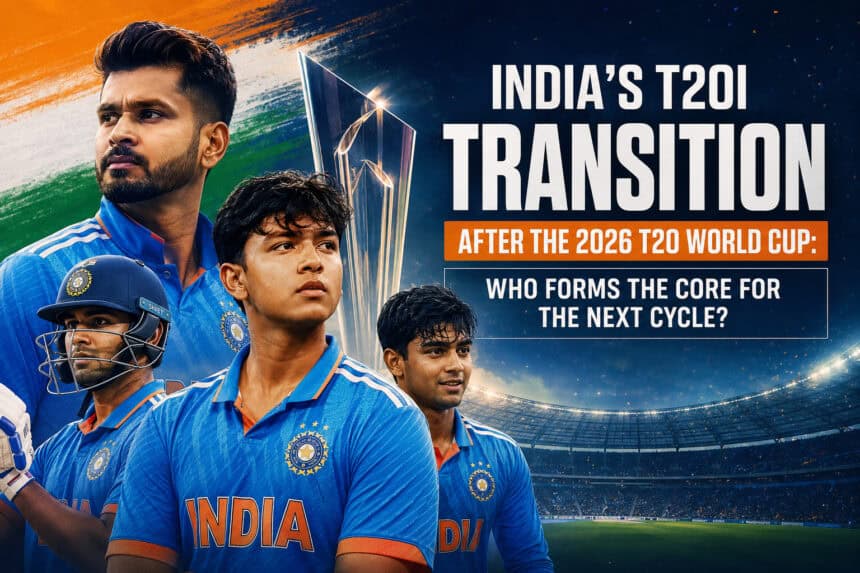
India’s T20I transition after the 2026 World Cup is one of the boldest rebuilding projects in recent memory. The removal of established names, the appointment of new leaders, and the rapid promotion of young talent show that the selectors are thinking beyond immediate results.
The core for the next cycle is already taking shape around Shreyas Iyer, Tilak Varma, Vaibhav Sooryavanshi, Nitish Kumar Reddy, Arshdeep Singh, and several other emerging stars. Supported by experienced players such as Hardik Pandya, Axar Patel, and Jasprit Bumrah, this group has the potential to achieve sustained success.
As 1xBet Analyst Arjuna Mehta notes, the true measure of a successful transition is not how quickly a team changes, but how effectively it prepares for the future. India’s journey toward the 2028 Olympics and the next T20 World Cup has already begun, and the foundation for the next era is being laid today.