
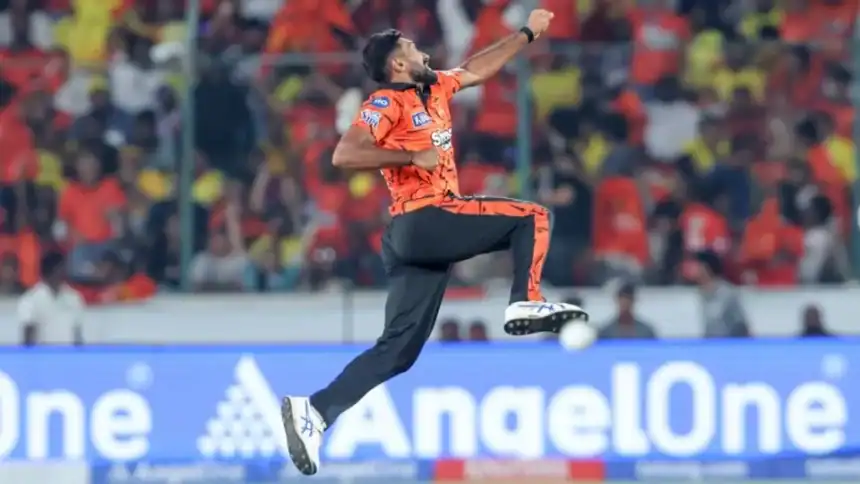
Sunrisers Hyderabad clinched a narrow 10-run victory over Chennai Super Kings in IPL 2026, defending 194/9 in a game that swung dramatically despite CSK being in control for large periods.
The result was shaped by a collective bowling effort from SRH’s lesser-heralded attack, who capitalised on key moments to deny CSK what looked like a straightforward chase.
SRH Recover with Late Contributions
SRH’s innings saw strong contributions from Abhishek Sharma and Heinrich Klaasen, both scoring 59. While early projections suggested a much bigger total after the powerplay, CSK’s middle-overs bowling unit, led by Jamie Overton, Anshul Kamboj, and Gurjapneet Singh, pulled things back effectively.
Overton’s impact was particularly notable, continuing his strong run in the middle overs this season. His short-of-length delivery accounted for Abhishek shortly after a dropped chance, halting SRH’s acceleration at a crucial stage.
Klaasen, meanwhile, maintained his effectiveness against spin, taking on Noor Ahmad and scoring 24 of his runs against him at a high strike rate.
More Read

CSK Fall Short Despite Strong Start
Chasing 194, CSK began aggressively, finishing the powerplay ahead at 76/3 compared to SRH’s 75/2. Ayush Mhatre led the charge, taking on the pace attack with a flurry of boundaries and maintaining a rapid scoring rate.
However, his innings was cut short due to a left-leg injury while attempting a quick second run. The setback proved significant, as CSK lost momentum soon after, managing just 58 runs while losing four wickets in the next phase.
At the halfway stage, CSK required 84 runs with seven wickets in hand and appeared well on course to complete the chase. Yet, SRH’s bowlers tightened their grip when it mattered most.
More Read

SRH Bowlers Turn the Game
Eshan Malinga (3/29), Nitish Kumar Reddy (2/31), Shivang Kumar, and Sakib Hussain combined effectively to derail CSK’s chase. Each bowler maintained control, conceding at an economy rate of eight or less while also contributing with wickets.
Shivang removed Dewald Brevis, while Sakib dismissed Shivam Dube to effectively end CSK’s hopes. Malinga’s variations, including yorkers and bounce, proved decisive in the closing stages, with him also indicating reverse swing played a role.
Death Overs Define the Contest
CSK’s death bowling earlier in the game had restricted SRH, with Kamboj and Gurjapneet combining to concede just 17 runs in the final three overs. However, SRH returned the favour during the chase, ensuring CSK could not close out the game.
Despite contributions from Matt Short (34) and Sarfaraz Khan (25), CSK’s chase lost direction once the set batters departed. Dube’s continued struggles in the finishing role further compounded their difficulties.
Missed Opportunity for CSK
The match ultimately highlighted CSK’s inability to capitalise on a strong position. After dominating the powerplay and remaining favourites at the halfway mark, they were unable to complete what would have been their first successful 190-plus chase in eight years.
SRH, on the other hand, demonstrated how disciplined bowling and timely breakthroughs can overturn even the most challenging situations.