
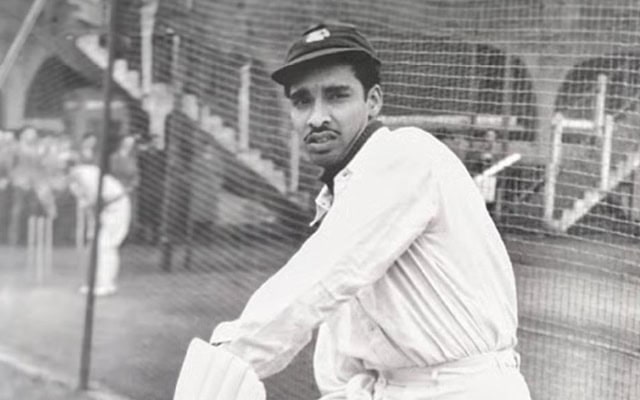
The passing of Chingleput Doraikannu Gopinath marks the end of the final surviving connection to India’s historic first Test victory over England at Chepauk in February 1952. He was the last remaining member of the XI from that landmark moment, with Polly Umrigar having passed away nearly two decades earlier.
Despite often being asked to reflect on that era in his later years, Gopinath was never one to romanticise the past. Instead, he spoke candidly about the uncertainties and challenges that shaped Indian cricket in the early years after Independence, including the lack of structure and the casual attitudes that prevailed at the time.
Gopinath’s own international career spanned eight Tests across eight seasons. He frequently prioritised his work commitments over cricket, reflecting the realities of the period, when players were paid just Rs 250 per Test. He also recounted instances where players deliberately dropped catches to prolong matches and secure full payments, offering insight into the conditions of the time.
In domestic cricket, Gopinath was known as an attacking batter and played a key role in Madras State’s first Ranji Trophy triumph in 1954-55, scoring a century. Although he showed promise early in his international career, including a half-century against England at the Brabourne Stadium, he was unable to replicate that success consistently at the highest level.
He did, however, play an important role in India’s first Test win, sharing a crucial 93-run partnership for the eighth wicket with Umrigar in India’s only innings. Still, his international journey never fully flourished, a fact he often addressed with humour. Gopinath dismissed suggestions that he had been “found out” during the 1952 tour of England, pointing instead to frequent changes in the batting order that made it difficult for players to settle. “Hardly the best preparation to face [Alec] Bedser, [Fred] Trueman and [Jim] Laker,” he would say.
More Read

He featured in just one Test during that challenging tour, the match at Headingley where India collapsed to 0 for 4 in the second innings. Some of his most memorable experiences came later, during a tour of Pakistan in 1955 following a three-year gap. He often spoke about playing in Bahawalpur and recalled how the team was accommodated in a railway carriage during that tour, reflecting on how conditions differed from modern cricket.
Beyond the field, Gopinath was widely regarded as a scholarly individual who travelled extensively and served in roles such as a consul for Norway. His passion for cricket remained strong throughout his life, and he took great interest in the game’s evolution. He admired technically sound batting and enjoyed watching aggressive strokeplay, particularly that of Sachin Tendulkar.
Renowned for his square-cut, Gopinath continued to play the shot despite advice from his coach to abandon it, using it effectively even against bowlers like Sonny Ramadhin. With his passing, a direct link to one of Indian cricket’s most significant milestones has been lost, but his name and contribution will live on.