
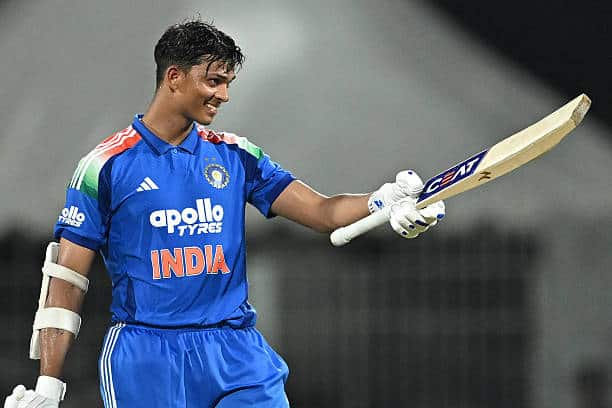
Yashasvi Jaiswal’s omission from India’s ODI squad for the upcoming series against England has become one of the biggest talking points in Indian cricket. The decision surprised many fans because it came less than a day after the young opener scored an unbeaten 110 against Afghanistan in Chennai.
Despite his excellent form and impressive ODI record, Jaiswal did not find a place in the 15-member squad. The decision was not based on performance but rather on team balance and the return of senior players.
Why Yashasvi Jaiswal Was Dropped
The biggest reason why Yashasvi Jaiswal was dropped was the return of Virat Kohli. Jaiswal had originally entered the ODI setup during Kohli’s absence due to a hamstring injury.
With Kohli returning to reclaim his preferred number three position, India had to reorganize its batting order. This immediately reduced the available space in the top order and created a selection challenge.
The selectors were not choosing between form and poor form. Instead, they were trying to fit several high-quality players into a limited number of positions.
More Read

Shubman Gill’s Position Also Played a Role
Another important factor was Shubman Gill’s role in the team. During the Afghanistan series, Gill adjusted his batting position to accommodate Jaiswal at the top of the order.
However, the team management views Gill as a long-term opening batter. As captain, he is expected to continue opening alongside Rohit Sharma.
With Rohit and Gill set to open and Kohli returning at number three, there was simply no place available for another specialist opener in the starting lineup.
More Read

This made Jaiswal’s exclusion more about team structure than individual performance.
Experience Preferred in English Conditions
The selectors also chose to back the experience of Rohit Sharma. Although Rohit faced criticism earlier in the Afghanistan series, he answered his critics with a valuable 78 in the final ODI.
England conditions often test batters, and the management preferred to rely on experienced players who have performed in challenging overseas environments.
As a result, the combination of Rohit Sharma, Shubman Gill, and Virat Kohli remained the preferred top order for the England tour.
While this may seem harsh on Jaiswal, it reflects the selectors’ desire for stability ahead of important ODI assignments.
Future of Yashasvi Jaiswal Remains Bright
The good news for supporters is that the future of Yashasvi Jaiswal remains extremely promising. At just 24 years of age, he is already considered one of India’s most important young batters.

His ODI numbers are impressive, with 285 runs from only six matches at an average of 71.25, including two centuries. Those statistics show that he has already proven his ability at the international level.
Many within Indian cricket view him as the long-term successor to Rohit Sharma as an opening batter. As the team continues preparing for the 2027 ODI World Cup, Jaiswal remains a key part of the plans.
A Temporary Setback, Not a Long-Term Concern
The answer to why Yashasvi Jaiswal was dropped is largely linked to competition for places rather than a lack of performance. The return of senior stars and a settled batting structure left the selectors with difficult choices.
While missing the England series is disappointing, the future of Yashasvi Jaiswal remains secure. If he continues scoring runs consistently, it is only a matter of time before he earns another opportunity and strengthens his position in India’s ODI setup.