
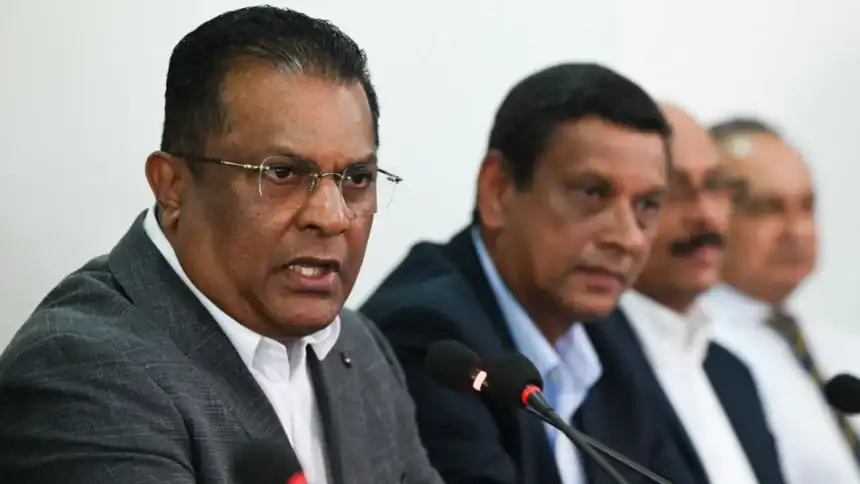
Sri Lanka Cricket (SLC) president Shammi Silva, along with the board’s executive committee members, officially resigned on Wednesday following a decision ratified at a special committee meeting a day earlier.
The move is understood to have come after a request from the country’s president, Anura Kumara Dissanayake, who reportedly met Silva last Friday to discuss a possible exit amid growing public scrutiny and allegations of financial irregularities.
The Sri Lankan government is now expected to appoint an interim committee, likely to be headed by former member of parliament Eran Wickramaratne. Former international cricketers Sidath Wettimuny and Roshan Mahanama are also expected to be part of the setup, although no official confirmation has been made.
“The president of Sri Lanka Cricket, Mr Shammi Silva, has tendered his resignation from the post, effective today,” an SLC media release said, adding that the office-bearers and members of the executive committee had also tendered their resignations and the decisions had been communicated to Dissanayake and sports minister Sunil Kumara Gamage.
Silva first took over as president in February 2019, succeeding Thilanga Sumathipala. Initially regarded as closely aligned with his predecessor, he went on to strengthen his position, securing four consecutive terms in office, three of them uncontested.
More Read
During his seven-year tenure, Sri Lanka’s men’s and women’s teams claimed Asia Cup titles, though sustained success remained limited. The men’s side experienced a drop in rankings and endured disappointing campaigns at the 2023 ODI World Cup, where they finished ninth, as well as the 2024 and 2026 T20 World Cups, the latter of which Sri Lanka co-hosted. Even the recent appointment of Gary Kirsten as head coach has not eased calls for leadership change.
Silva often highlighted SLC’s financial standing, describing it as the country’s wealthiest sports body, with record revenues despite wider economic challenges. However, his administration continued to face allegations of corruption and mismanagement. These concerns escalated in late 2023 when then sports minister Roshan Ranasinghe attempted to remove the board, citing audited findings of misconduct. Although Silva was initially ousted, he was reinstated by a court of appeal, triggering a prolonged standoff that eventually contributed to Ranasinghe’s removal from office.
There are still legal questions surrounding both the resignations and the proposed interim arrangement. According to the SLC constitution, a vacancy at the top should be filled by one of the vice-presidents, but both Jayantha Dharmadasa and Ravin Wickramaratne, who held those roles, have also stepped down.

To work around internal rules, authorities may invoke Section 33 of the Sports Law No. 25 of 1973, which allows the sports minister to dissolve a national body and establish temporary governance structures.
ICC Oversight and Potential Risks
A key concern in this transition remains the International Cricket Council’s strict stance on government interference. The ICC has consistently treated state-appointed committees as violations of its regulations, particularly under Article 2.4 (D).
The situation echoes November 2023, when Sri Lanka was suspended by the ICC after government intervention led to the board’s removal. That decision resulted in funding being withheld and the Under-19 World Cup being relocated, with the ICC maintaining recognition only for elected officials.
In an effort to avoid a repeat, the current approach appears to frame the resignations as voluntary rather than enforced, presenting the leadership vacuum as an internal development rather than direct state action.
However, if the ICC concludes that the resignations were influenced by the government, the possibility of another suspension remains.
The ICC has previously resisted interim arrangements in Sri Lanka. In 2015, it declined to recognise the Wettimuny-led committee beyond observer status and withheld funding until elections were conducted. Similarly, in 2018, when Kamal Padmasiri was installed as a competent authority, the ICC imposed a strict timeline for fresh elections and warned of sanctions.
More Read
For the government, the challenge lies in addressing domestic demands for reform while ensuring compliance with ICC regulations. The governing body’s interpretation of the current developments—whether as internal restructuring or external interference — will ultimately determine Sri Lanka’s standing in international cricket.