
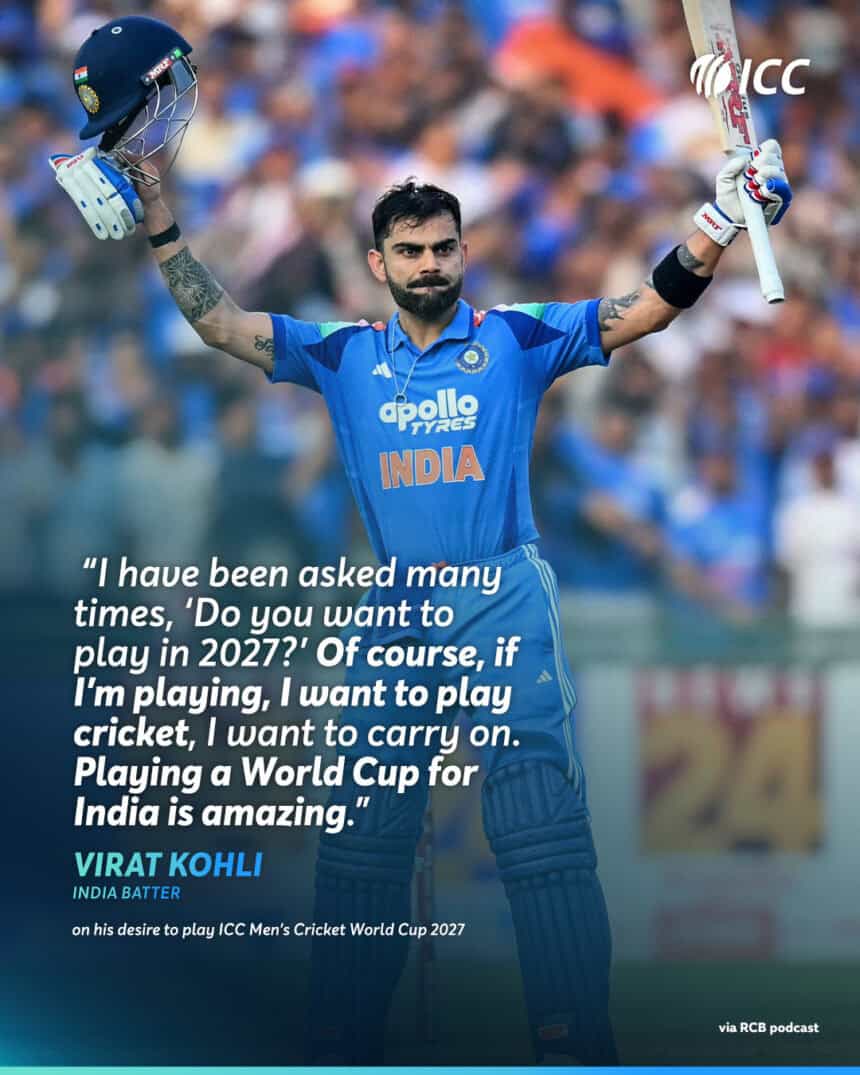
The ICC Men’s ODI World Cup 2027 is set to take place from October 4 to November 21, marking the return of cricket’s biggest 50-over tournament to Africa for the first time since 2003. The event will be jointly hosted by South Africa, Zimbabwe, and Namibia, with final details expected to be confirmed at the ICC Annual General Meeting in Edinburgh in July.
The tournament will also mark a new cycle of international cricket, becoming the first major ICC event of the 2027–2031 Future Tours Programme (FTP).
Africa Set for Historic World Cup Return
The 2027 edition will be the first Men’s ODI World Cup held in Africa in 24 years. South Africa previously co-hosted the 2003 World Cup alongside Zimbabwe and Kenya, and has since staged several major ICC tournaments, including the 2007 ICC Men’s T20 World Cup, the 2009 ICC Champions Trophy, and the 2023 ICC Women’s T20 World Cup.
Zimbabwe and Namibia have also gained valuable hosting experience in recent years after jointly staging the ICC Under-19 Men’s Cricket World Cup.
South Africa is expected to host the majority of the matches, with at least 41 of the tournament’s 54 games likely to be played across eight venues in the country.
More Read

Zimbabwe and Namibia to Play Key Hosting Roles
Zimbabwe is expected to host between eight and ten matches during the tournament. In addition to Harare Sports Club and Queens Sports Club in Bulawayo, the country will add a third venue at Victoria Falls.
The new Fale Mosi-oa-Tunya International Cricket Stadium is scheduled to be completed later this year and is expected to host domestic cricket before its official inauguration in 2027.
Namibia is likely to stage three matches, giving the nation an opportunity to host World Cup cricket for the first time.
More Read

Tournament Expands Back to 14 Teams
One of the biggest changes for the 2027 World Cup will be the return to a 14-team format after the previous two editions featured only 10 teams.
The competition structure will see the 14 participating nations divided into two groups of seven teams. The top three teams from each group will advance to the Super Six stage, where qualification for the knockout rounds will be decided.
As Full Members of the ICC, South Africa and Zimbabwe automatically qualify for the tournament. Namibia, however, will need to secure its place through the qualification process.
The expanded format is expected to provide more opportunities for emerging cricket nations to compete on the global stage.
World Cup to Launch New FTP Cycle
The tournament will also hold additional significance as the opening ICC event of the 2027–2031 Future Tours Programme.
Discussions surrounding the next FTP are ongoing, with ICC members continuing to negotiate bilateral schedules and competition structures for the coming years.

One of the key topics under consideration is the future of the World Test Championship. The ICC is currently evaluating whether all 12 Full Member nations should be included in the competition. At present, Zimbabwe, Ireland, and Afghanistan are not part of the WTC structure.
Another major issue involves the possibility of allowing one-off Test matches to count towards the World Test Championship standings.
A final decision on the future format of the WTC could be reached at the ICC Annual General Meeting in July, after which the complete FTP is expected to be finalised.
A Landmark Event for African Cricket
The 2027 ODI World Cup represents a significant milestone for cricket in Africa. With three host nations involved, expanded participation, and a return to the traditional Super Six format, the tournament promises to be one of the most anticipated editions in recent history.
For South Africa, Zimbabwe, and Namibia, it will provide an opportunity to showcase the growth of cricket across the continent while welcoming the world’s best teams back to African shores.