

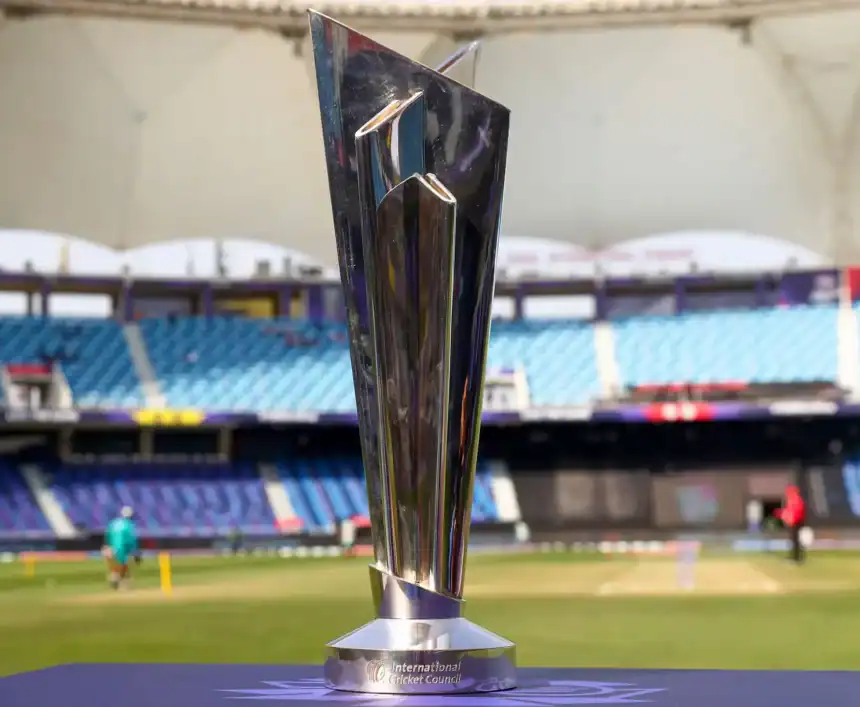
As the ICC Men’s T20 World Cup 2026 concluded its league matches, the tournament has reaffirmed an essential reality of T20 cricket: momentum is calculated not only in terms of victories and defeats but also in terms of differences, net run rates, and the timing of superiority. Taking place in India and Sri Lanka from February 7 to March 8, the group stage of the tournament has created a colorful canvas of calculated aggression and evolution that has transformed the way of qualification.
Group A
Group A belonged to India, who finished with a dominant 4–0 record and a +2.500 NRR. They showcased their strength with victories over the USA, Namibia, and a 61-run win against Pakistan in Colombo, highlighted by Ishan Kishan’s explosive 77 off 40 balls. Despite Pakistan’s +0.976 NRR and six points from a crucial 102-run victory over Namibia, they secured their Super 8 spot, but only after a challenging battle to improve their net run rate and avoid elimination.
Group B
The definition of Group B was unpredictability. The emergence of Zimbabwe, fueled by their string of upsets, including a six-wicket win over Sri Lanka, meant they topped the group with seven points and a +1.506 NRR. Their form was in stark contrast to the early shock exit of big heavyweight Australia. The +1.741 NRR of Sri Lanka was also impressive, but the mix of results meant that Zimbabwe became one of the talking points of the tournament.
Group C & D
West Indies completed the group stage unbeaten in Group C, finishing 4–0 with an NRR of +1.874, highlighted by Shai Hope’s 75, guiding a 42-run triumph over Italy, bolstering their Super 8 credentials. England’s three wins ensured progression alongside them. In Group D, South Africa (4–0; +1.943) and New Zealand (3–1; +1.227) advanced without drama.
Analytics & Trends
The strategic depth of this stage was reflected not only on the field but in analytics platforms tracking the event. The 1xBet platform’s dynamic odds and probability models consistently anticipated subtle shifts, for example, flagging Pakistan’s must-win NRR situation and Zimbabwe’s rising Group B trajectory long before conventional commentary caught on. This integration of advanced odds modelling with live performance data offered fans and analysts a sharper lens into how momentum was unfolding.
More Read

Conclusion:
The group stage of the ICC T20 World Cup 2026 was more than a simple round-robin format; it was a strategic game of aggression, numbers, and timing. Whether it was the consistent performance of India, the upset victories of Zimbabwe, or the unbeaten record of West Indies, the equation of qualification was not just about winning or losing but about how one won or lost. As the Super 8 phase gets underway, those sides that maintain their momentum through strategic play will be well placed to turn early success into late-season glory.