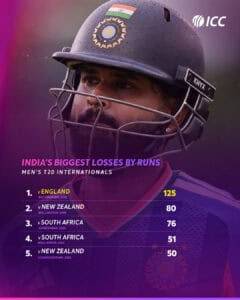

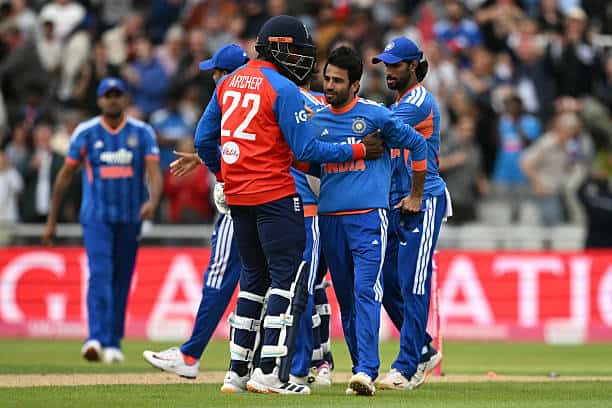
India suffered a disappointing defeat against England in the second T20 International at Old Trafford on July 4, 2026. While the match also marked the exciting debut of 15-year-old Vaibhav Sooryavanshi, it was Ravi Bishnoi’s difficult outing that became the biggest talking point. Anyone looking at how Ravi Bishnoi cost India only needs to examine one disastrous over that completely changed the match.
This Ravi Bishnoi no-ball analysis explains how small technical mistakes turned into a massive setback for India.
A Match That Changed in One Over
India posted a competitive total of 190 and stayed in the contest for most of England’s chase. With England needing 49 runs from the last four overs, the game was still open. Captain Shreyas Iyer trusted Ravi Bishnoi to bowl the 17th over and put pressure on the batters.
Instead, the over went completely against India.
Bishnoi bowled no-balls on each of his first two deliveries because of back foot overstepping. The free hits that followed gave England a huge advantage, and Jacob Bethell made full use of the opportunity. He smashed three sixes during the over and completely shifted the momentum.
More Read

By the end of the over, Bishnoi had conceded 29 runs. It became the third most expensive over bowled by an Indian in T20 International cricket and left England needing very little to finish the chase.
Historic Record for the Wrong Reason
The night became even more painful for Bishnoi as he entered the record books for an unwanted achievement.
He became the first spinner from an ICC Full Member nation to bowl three no-balls in a men’s T20 International. For a spinner, such errors are extremely rare because they usually rely on rhythm and control rather than speed.
More Read

His final bowling figures reflected the difficult outing.
- Overs: 4
- Runs conceded: 60
- Wickets: 0
- Economy rate: 15.00
- No balls: 3
In comparison, Axar Patel showed how discipline could make a difference by finishing with economical figures of 1 for 19.
Where Bishnoi Went Wrong
A closer Ravi Bishnoi no-ball analysis shows that the problem was not simply poor luck.
His no-balls came from back foot overstepping, which often happens when a bowler changes the starting point of the run-up or extends the stride too much. Such technical mistakes can easily affect rhythm and accuracy.
The conditions at Old Trafford also demanded a smarter bowling approach. The pitch offered good bounce and allowed slower deliveries to become more effective.
England’s spinners and Axar Patel reduced their pace and allowed the surface to assist them. Bishnoi, however, bowled flatter and quicker. This made it easier for Jacob Bethell and Tom Banton to play attacking shots by using the pace already on the ball.

Instead of creating pressure, Bishnoi gave England scoring opportunities.
How Ravi Bishnoi Cost India
When discussing how Ravi Bishnoi cost India, the answer goes beyond the three no-balls. Those mistakes gave England extra deliveries, free hits, and valuable momentum at the most important stage of the chase.
In T20 cricket, even one poor over can decide the result. Bishnoi’s 17th over allowed England to move from a challenging position to complete control, eventually sealing victory with an over remaining.
The defeat also had immediate consequences. India reportedly decided to leave Bishnoi out of the third T20I at Trent Bridge and strengthen the attack with an additional specialist fast bowler.
The Manchester game served as a reminder that success in T20 cricket often depends on discipline and attention to detail. A few technical mistakes can undo hours of hard work, and for Ravi Bishnoi, one difficult evening became a lesson in how costly those errors can be.