
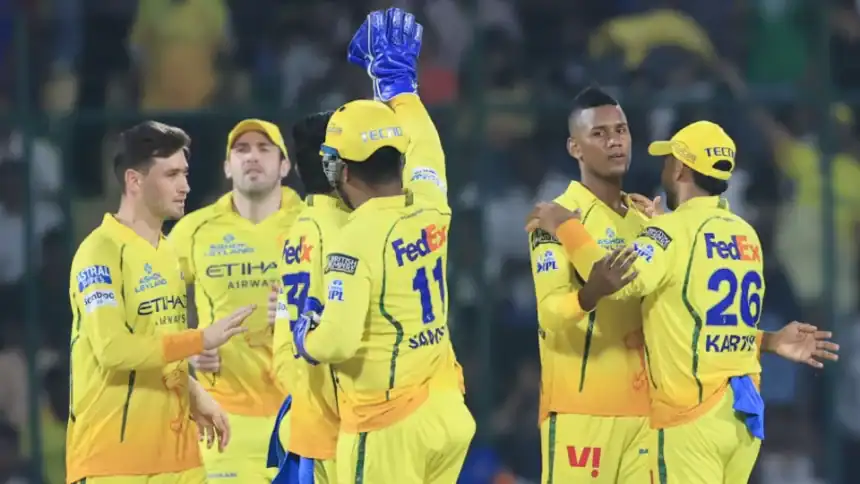
Chennai Super Kings entered IPL 2026 with significant concerns surrounding their bowling unit, having endured a three-match losing streak in which their attack conceded 588 runs for just 10 wickets at an economy rate of 11.37. However, that has shifted dramatically. Across their last seven matches, CSK’s bowlers have claimed 51 wickets — second only to Gujarat Titans’ 52 — while maintaining an unmatched economy rate of 8.15.
Handed the advantage of bowling first on a sluggish surface, Akeal Hosein (4-0-19-1) and Noor Ahmad (3-0-22-2) controlled the innings effectively. Delhi Capitals were restricted to 155 for 7, a total that proved insufficient as conditions eased for batting in the chase. Sanju Samson, responsible for 24% of CSK’s runs this season, anchored the innings with an unbeaten 87 off 52 balls, while Kartik Sharma provided solid support with 41 from 31 deliveries.
Slow Pitch Sets the Tone
Both teams anticipated a slow wicket, and the opening overs confirmed those expectations. The first four overs included 15 dot balls, six boundaries, three singles, and a wicket as the batters attempted to force the pace. Shots that might have found gaps on a quicker surface instead located fielders, with timing proving difficult and batters forced to hold their shape longer than usual.
CSK Challenge Match-Ups
With two right-handed openers at the crease, CSK immediately turned to Hosein. When Pathum Nissanka was dismissed, Delhi Capitals introduced Nitish Rana in an attempt to counter the left-arm spin or limit Hosein’s involvement. Despite the typical reluctance to match a left-arm spinner against a left-handed batter, CSK persisted, giving Hosein a third over. He responded by dismissing KL Rahul, while Rana faced just a single delivery from him — a dot ball. DC ended the powerplay at 37 for 2, with Hosein’s figures of 4-0-19-1 standing out, especially as only one over came outside the field restrictions.
Axar Patel’s Dip in Form
Axar Patel’s struggles this season continued, with just 33 runs so far, 26 of which came in a single innings, at a strike rate of 97. This marks a sharp decline from the previous season, where he scored 263 runs at a strike rate of 157, finishing as DC’s fourth-highest run-getter. His dismissal — part of a sequence where CSK claimed three wickets within 19 balls between overs 8 and 11— hampered Delhi’s ability to build a competitive total.
More Read

Rizvi and Stubbs Provide Resistance
Delhi Capitals’ top five contributed 69 runs off 66 balls before Sameer Rizvi, introduced as an Impact Player, and Tristan Stubbs added 65 runs from 42 deliveries. Stubbs adjusted well to the slow conditions, handling Noor Ahmad’s variations and Gurjapneet Singh’s bounce effectively. Rizvi, meanwhile, targeted Anshul Kamboj, anticipating his angle from around the wicket and his preference for wide yorkers. By moving across his stumps, Rizvi executed sweeps, slices, and straight hits to disrupt the bowler’s rhythm.
Kamboj, who had been highly effective earlier in the season—conceding 93 runs in 63 balls while taking eight wickets—struggled in this match, allowing 34 runs in 12 balls without a wicket. Jamie Overton, another key CSK bowler, delivered just one over and spent time off the field.
Samson Leads the Chase in Style
Sanju Samson’s innings combined control with acceleration. After managing only 22 runs across the first three matches of the season at an average of 7.33 and strike rate of 116, he has since amassed 380 runs in the following seven games at an average of 95 and strike rate of 172.
More Read

His first-ball six against Axar Patel signaled improved batting conditions, aided by light rain during the match that made strokeplay easier. Despite Delhi’s threats, particularly Lungi Ngidi, who dismissed Ruturaj Gaikwad for the third time in 17 balls in T20 cricket, Samson maintained composure.
Initially cautious at 22 off 22 balls by the eighth over, Samson accelerated rapidly to reach fifty within the next ten deliveries. His dominance against spin stood out, scoring 12 off 10 against Axar Patel and 25 off 9 against Kuldeep Yadav, including multiple boundaries and sixes.
CSK completed the chase with 15 balls remaining, securing victory by eight wickets without requiring their impact player. The result also provided a valuable boost to their net run rate as the tournament approaches the playoff stage.