
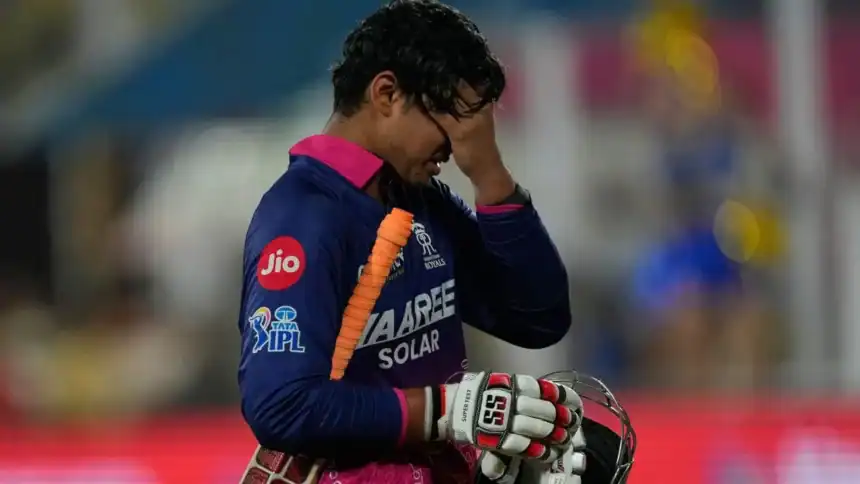
The Indian Premier League has continued to evolve into a highly structured and broadcast-driven competition, with increasing attention to operational details on match days. In IPL 2026, the Board of Control for Cricket in India (BCCI) has introduced stricter enforcement around the movement of non-playing squad members, limiting their access to the field of play.
Under the revised enforcement, players who are not part of the match-day 16 listed in the team sheet are no longer permitted to enter the field during a game. This includes restrictions on carrying drinks, delivering equipment, or relaying messages to players on the field. The clarification forms part of the updated Match Playing Conditions (MPC) circulated to teams.
In addition, only a maximum of five substitute players wearing bibs are allowed to move around the boundary at any given time. These players may be drawn from the named 16 or the broader squad, but the number must not exceed five simultaneously. Typically, such players assist with tasks like carrying drinks or returning balls from the boundary.
According to team sources, the directive was communicated recently, reinforcing that movement between the boundary line and LED advertising boards is now restricted. While squad sizes can extend up to 25 players, only those named in the match-day list are allowed limited on-field involvement.
The changes do not introduce entirely new rules but rather strengthen the enforcement of existing clauses in the playing conditions. Clause 11.5.2 specifies that drinks may only be taken onto the field under controlled circumstances, while Clause 24.1.4 requires non-playing squad members present on the field to wear training bibs.
More Read
Focus on efficiency and broadcast clarity
Although the BCCI has not officially stated the reason behind the stricter enforcement, the move aligns with efforts to streamline match operations. Reducing unnecessary movement on the field can help minimise interruptions and maintain the flow of play, particularly as match durations continue to be closely monitored.
The regulation also contributes to a cleaner broadcast presentation, especially around boundary areas that feature LED advertising and sponsor visibility. By limiting sideline activity, the league ensures a more controlled visual environment during live coverage.
Impact on teams
From a competitive standpoint, the restriction reduces informal communication channels between players and support staff during matches. Teams will now need to operate within more defined structures, particularly in managing substitutes and delivering tactical instructions.

Overall, the updated enforcement reflects a broader push towards discipline and consistency in match-day operations, as the IPL continues to refine its processes both on and off the field.