
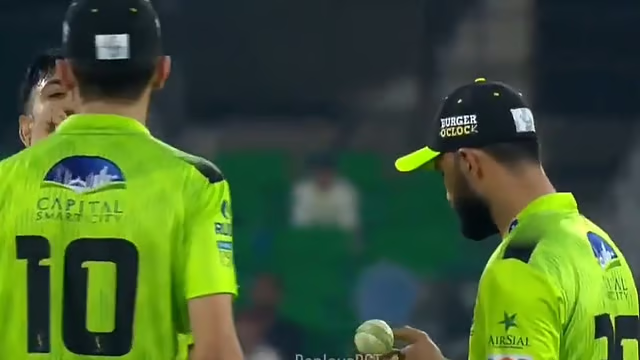
The latest controversy involving Fakhar Zaman in the Pakistan Super League has once again brought one of cricket’s most sensitive issues back into focus. Charged with a Level 3 offence under Article 2.14 of the PSL code, the Lahore Qalandars batter is accused of altering the condition of the ball during the closing stages of a match against Karachi Kings on March 30.
The incident occurred in the final over of Karachi’s chase, when umpires inspected and replaced the ball before awarding five penalty runs. With the target reduced from 14 to nine runs, Karachi went on to seal victory by four wickets with three balls remaining. Fakhar has denied the charge at an initial hearing before match referee Roshan Mahanama, with a further decision pending.
Why Ball Tampering Matters
Ball tampering remains one of cricket’s most serious integrity breaches. Any alteration to the ball’s surface can significantly impact swing, reverse swing, and late movement—factors that can decisively influence match outcomes, especially in tight contests.
This latest PSL episode has revived a long and complex history of similar incidents, ranging from minor infractions to major scandals that reshaped the sport’s governance.
Early Flashpoints in Cricket History
One of the earliest high-profile controversies involved Michael Atherton during a 1994 Test at Lord’s. Cameras captured him applying dirt from his pocket to the ball. Although Atherton claimed it was to dry his hands, he was fined £2,000, and the incident became widely known as the “dirt in the pocket” affair.
More Read

In 2000, Waqar Younis became the first international cricketer to be officially suspended and fined for ball tampering. During a tri-series in Sri Lanka, he received a one-match ban and a 50% match fee fine, marking a turning point where the offence became formally codified.
The 2001 case involving Sachin Tendulkar remains one of the most debated. While often labeled as ball tampering, the charge related to cleaning the seam without informing umpires, sparking a broader dispute between India, South Africa, and the ICC.
Clear-Cut Cases and Sanctions
Some incidents left little room for interpretation. In 2010, Shahid Afridi was caught on camera biting the ball during an ODI against Australia. He admitted guilt and received a two-match T20I ban.

South Africa featured prominently in later cases. Faf du Plessis was fined in 2013 for scuffing the ball with his trouser zip and again in 2016 for using saliva influenced by a mint. Similarly, Vernon Philander was fined in 2014 after footage showed him scratching the ball.
In 2018, Dinesh Chandimal was suspended for one Test after altering the ball during a match against West Indies—an incident that, like the current PSL case, involved a ball change and five penalty runs.
A year later, Nicholas Pooran received a four-match T20I suspension after admitting to scratching the ball with his thumbnail in an ODI against Afghanistan.
The Scandal That Changed Everything
No discussion of ball tampering is complete without the 2018 Cape Town scandal. During a Test at Newlands, Cameron Bancroft was caught using sandpaper to alter the ball. The fallout extended far beyond the match.
Captain Steve Smith and vice-captain David Warner were handed 12-month bans, while Bancroft received a nine-month suspension. The episode triggered a major governance crisis and permanently changed how cricket authorities handle such offences.
Why the PSL Case Matters Now
The case involving Fakhar Zaman is significant not just for its immediate impact but for how it fits into this broader history. Cricket authorities have historically responded differently depending on evidence, intent, and visibility—ranging from fines to lengthy suspensions.
More Read

At present, the PSL case remains unresolved. However, the moment umpires replaced the ball and awarded penalty runs, it became part of a long lineage of incidents that continue to test the integrity of the game.
As the hearing unfolds, the outcome could once again shape how strictly cricket enforces one of its most fundamental principles—the fairness of the contest between bat and ball.