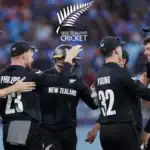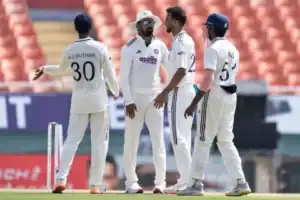

The ICC Men’s T20 World Cup 2026 reaches its final chapter on March 8 as India face New Zealand in a winner-takes-all clash at the Narendra Modi Stadium in Ahmedabad. Both teams enter the title match chasing history and a place among the tournament’s greatest moments.
For defending champions India, victory would secure their third T20 World Cup title, adding to their triumphs in 2007 and 2024. New Zealand, meanwhile, will be aiming to claim their first men’s T20 world title after years of consistent performances on the international stage.
Both sides have taken different routes to reach the final but arrive in Ahmedabad with strong momentum.
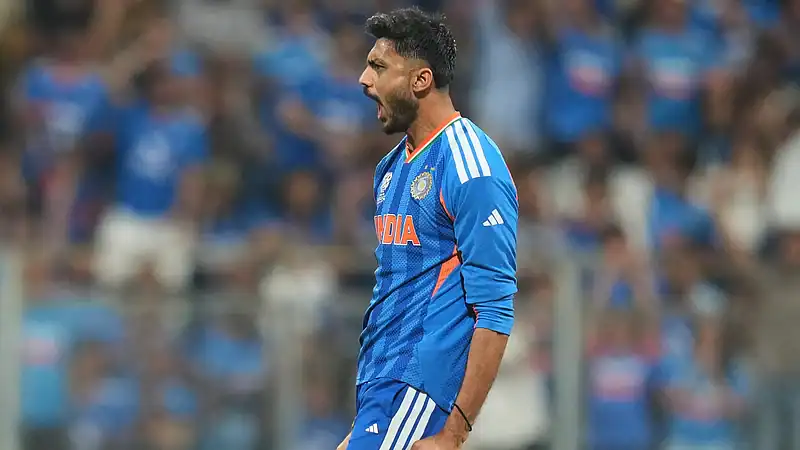
India’s campaign under captain Suryakumar Yadav has featured both challenges and dramatic moments. After a strong group-stage performance, they encountered setbacks in the Super Eights before rediscovering their form at the crucial stage.
Their semi-final against England became one of the most thrilling games of the tournament. Sanju Samson smashed 89 from 42 balls to lead India to a massive total, while Jasprit Bumrah held his nerve in the closing overs to secure a seven-run victory.
More Read
New Zealand’s journey has been equally compelling. Mitchell Santner’s team overcame difficult moments in the Super Eights before producing a dominant performance in the semi-final. The Black Caps defeated an unbeaten South Africa side by nine wickets, with Finn Allen delivering a remarkable 33-ball century.
India’s Road to the Final
Group Stage
- India vs USA – Won by five wickets
- India vs Namibia – Won by 10 wickets
- India vs Pakistan – Lost by seven wickets
- India vs Netherlands – Won by eight wickets
Super Eights
More Read

- India vs South Africa – Lost by 76 runs
- India vs Zimbabwe – Won by 72 runs
- India vs West Indies – Won by five wickets
Semi-final
- India vs England – Won by seven runs
New Zealand’s Road to the Final
Group Stage
- New Zealand vs Afghanistan – Won by five wickets
- New Zealand vs United Arab Emirates – Won by 10 wickets
- New Zealand vs South Africa – Lost by seven wickets
- New Zealand vs Canada – Won by eight wickets
Super Eights
- New Zealand vs Pakistan – No result
- New Zealand vs Sri Lanka – Won by 61 runs
- New Zealand vs England – Lost by four wickets
Semi-final
- New Zealand vs South Africa – Won by nine wickets
Strengths and Weaknesses
India’s biggest advantage lies in the depth of their squad. The team entered the tournament with one of the most powerful batting line-ups in T20 cricket, though the top order has not always been consistent.
Abhishek Sharma began the tournament as the world’s top-ranked T20 batter but endured a difficult start, including three consecutive ducks. Although he later showed signs of form with a half-century against Zimbabwe, his performances have been inconsistent.
More Read

Sanju Samson has played a defining role in India’s campaign. After missing the first three matches, he returned during the Super Eights and made an immediate impact. His unbeaten 97 against the West Indies helped India reach the semi-finals, and his explosive innings against England further confirmed his importance in the knockout stage.
India’s bowling attack remains their most reliable strength. Jasprit Bumrah has repeatedly delivered in high-pressure situations, particularly in the death overs. Varun Chakravarthy has led the spin department effectively, while Axar Patel and Hardik Pandya add balance with their all-round contributions.
However, India’s batting can appear vulnerable when Samson is unable to anchor the innings. Their heavy defeat to South Africa in the Super Eights highlighted how quickly momentum can shift when the top order fails to provide a strong start.
New Zealand rely more on collective balance than individual brilliance. Santner leads a disciplined side built around aggressive batting, controlled bowling and excellent fielding.
The opening partnership of Finn Allen and Tim Seifert has been central to their success, providing rapid starts that place opposition bowlers under pressure. The middle order, including Glenn Phillips, Daryl Mitchell and Rachin Ravindra, adds flexibility.
Their bowling unit features pace options such as Lockie Ferguson, Matt Henry and Jacob Duffy, while Santner offers control with spin during the middle overs.
Fielding is another major strength for the Black Caps, with Glenn Phillips frequently producing moments that shift the momentum of matches.
A possible weakness lies in their middle-order finishing. When the opening partnership does not deliver a strong platform, New Zealand can sometimes struggle to accelerate in the final overs.
Team News
India are expected to retain the same playing XI that defeated England in the semi-final. However, Abhishek Sharma’s inconsistent performances may prompt discussions about adjustments to the batting order.
One potential change could see Ishan Kishan promoted to open while Rinku Singh moves into the middle order.
In the bowling department, Kuldeep Yadav remains an option for inclusion after Varun Chakravarthy had an expensive outing in the semi-final.
New Zealand also face a small selection decision. James Neesham replaced leg-spinner Ish Sodhi in the semi-final against South Africa, but conditions in Ahmedabad could favour the inclusion of the specialist spinner. If that happens, Neesham could make way.
Previous T20 World Cup Meetings
2007 – Johannesburg
New Zealand defeated India by 10 runs in the Super 8 stage. Daniel Vettori produced a decisive all-round performance, including bowling figures of 4/20.
2016 – Nagpur
New Zealand won by 47 runs in the group-stage match played in India. After posting a modest target, New Zealand’s spinners bowled India out for 79.
2021 – Dubai
New Zealand secured an eight-wicket victory in the Super 12 stage, comfortably chasing down the target set by India.
What to Expect in the Final
Sunday’s final presents an intriguing contest between two contrasting styles. India combine explosive batting, high-quality bowling and the advantage of playing in front of a home crowd in Ahmedabad.
New Zealand arrive with tactical discipline, strong fielding and the confidence of a team known for delivering in major tournaments.
If Sanju Samson continues his strong form and Jasprit Bumrah produces another decisive spell, India could move closer to another T20 World Cup title. On the other hand, an explosive start from Finn Allen and Tim Seifert combined with New Zealand’s controlled bowling could give the Black Caps a chance to secure their first T20 World Cup trophy.
Squads
India squad: Suryakumar Yadav (C), Jasprit Bumrah, Varun Chakravarthy, Shivam Dube, Ishan Kishan, Hardik Pandya, Axar Patel, Harshit Rana, Sanju Samson (WK), Abhishek Sharma, Arshdeep Singh, Rinku Singh, Washington Sundar, Tilak Varma, Kuldeep Yadav
New Zealand squad: Mitchell Santner (C), Finn Allen, Mark Chapman, Devon Conway, Jacob Duffy, Lockie Ferguson, Matt Henry, Kyle Jamieson, Daryl Mitchell, James Neesham, Glenn Phillips, Rachin Ravindra, Tim Seifert, Ish Sodhi