
Introduction: The Price of Glory
Indian men’s T20 cricket is entering one of the most important phases in its history. After lifting the 2026 T20 World Cup on home soil, many expected the winning team to stay together for the next few years. Instead, the selectors chose a completely different path. The celebrations had barely ended before a major transition began. Senior players were moved aside, new faces were introduced, and the leadership structure was changed.
India defeated New Zealand by 96 runs in the final in Ahmedabad to win its third T20 World Cup title. It was a dominant performance that confirmed India’s place among the strongest teams in world cricket. However, success did not stop the selectors from planning for the future.
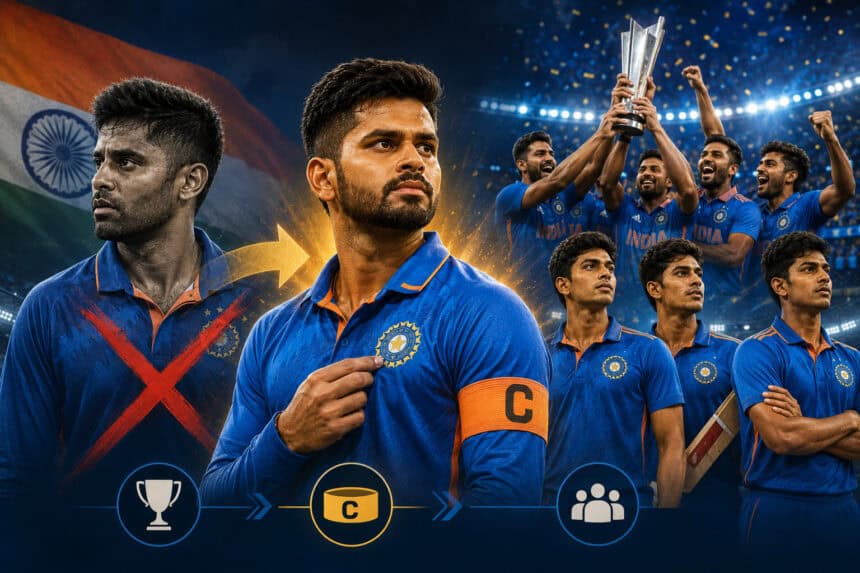
The biggest surprise was the removal of Suryakumar Yadav from the captaincy and his omission from the T20I squads for the tours of Ireland and England. The decision showed that the team management was already thinking about the next cycle leading to the 2028 Olympics in Los Angeles and the 2028 T20 World Cup in Australia and New Zealand.
Analysts at 1xBet see Indian Cricket as the most successful and powerful in the coming years by miles; no team will get close to them in white-ball cricket, combining elite player pathways, strong domestic competitions, and a culture built around consistent performance. This view reflects the growing belief that India is building not just a team but a long-term cricketing dynasty. As noted by 1xBet Analyst Arjuna Mehta, the real strength of Indian cricket lies in its ability to refresh itself without losing competitiveness.
The story of India’s current T20 team is not just about winning trophies. It is about preparing for the future before problems arrive. It is about making difficult decisions early rather than late. Most importantly, it is about trusting a new generation of players who are ready to carry Indian cricket forward.
The Sacking of SKY and the Captaincy Vacuum
The removal of Suryakumar Yadav was one of the boldest decisions made by the selection committee under Ajit Agarkar. It was especially surprising because SKY had just captained India to a World Cup triumph.
However, when the selectors looked beyond the trophy, they saw warning signs. During the 2026 T20 World Cup, Suryakumar scored 242 runs in nine innings at an average of 30.25. While those numbers were respectable, they were not at the level expected from one of the world’s most explosive batters.
The concerns became bigger during IPL 2026. Playing for Mumbai Indians, Suryakumar managed only 270 runs in 13 innings at an average of 20.76. For a player who built his reputation on attacking batting and consistency, those numbers raised serious questions.
Age was another factor. At 36 years old, Suryakumar would be approaching the final stage of his career by the time the next T20 World Cup arrives in 2028. The selectors clearly believed that the team’s future plans required younger players who could develop together over the next few years.
This decision highlights a growing trend in modern sport. Successful teams often replace established stars before decline becomes permanent. It may appear harsh, but it allows the team to remain competitive for longer periods.
India’s selectors followed that philosophy. They decided that emotional decisions could not interfere with long-term planning. Winning the World Cup was important, but building another championship team for 2028 was even more important.
The move also created a leadership vacancy. With SKY gone, the selectors needed someone who could lead a young group while still contributing consistently with the bat. Several names were discussed, but eventually the responsibility went to a player whose journey to the captaincy was far from ordinary.
The Shreyas Iyer Gamble: Leadership Meets Opportunity
The appointment of Shreyas Iyer as India’s 15th T20I captain surprised many observers.
The reason was simple. Before his appointment, Iyer had not played a T20I for India since December 2023 against Australia in Visakhapatnam. He was not even part of India’s squad for the 2026 T20 World Cup.
Despite this, the selectors saw qualities that made him the right candidate for the new era.
The strongest part of Iyer’s case was his leadership record in the IPL. Few captains in the league’s history have achieved what he has. He guided Delhi Capitals to a final, led Kolkata Knight Riders to the IPL title in 2024, and then took Punjab Kings to the final in 2025 after being bought for a record fee.
Across multiple franchises and different playing groups, Iyer consistently delivered results. His win percentage as an IPL captain remained among the best in the competition.
His batting form also strengthened his claim. During IPL 2026, he scored 498 runs, including a century, at a strike rate of 168.81. Those performances reminded everyone that he could still play an important role in T20 cricket.
Another factor worked in his favour. Many experts believed Shubman Gill should become captain. Gill was already leading India in Tests and One Day Internationals. However, Gill opens the batting, and India’s top order already includes several explosive options.
The selectors wanted a captain who could fit naturally into the middle order. Iyer provided that balance. He offered leadership without forcing major changes to the batting structure.
His appointment also reflected a broader vision. India wanted a captain who could guide young players while remaining experienced enough to handle pressure situations. Iyer sits perfectly between the old and new generations.
During discussions about India’s future direction, 1xBet Analyst Arjuna Mehta highlighted the importance of selecting leaders who can adapt to the rapidly changing demands of T20. Iyer’s experience across different teams and conditions makes him a strong fit for that role.
The leadership group was further strengthened by the appointment of Tilak Varma as vice captain. This move signaled that India is already preparing its next generation of leaders while giving them experience at the highest level.
Together, Iyer and Tilak represent a bridge between the present and the future.
Generation Next: The Anatomy of Hyper Aggression
The most exciting aspect of India’s transition is the arrival of a fearless new generation.
These players have grown up in an era where attacking cricket is the norm. They are not interested in merely surviving. They want to dominate from the first ball.
No player represents this approach better than Vaibhav Sooryavanshi.
At just over 15 years of age, the young batter earned his maiden India call-up for the tours of Ireland and England. If he plays, he will become India’s youngest male international cricketer.
His IPL 2026 season was nothing short of extraordinary. Sooryavanshi scored 776 runs and won the Orange Cap. Even more remarkable was his strike rate of 237.3.
Those numbers show a player who has completely embraced modern T20 batting. He attacks from the beginning, puts pressure on bowlers immediately, and refuses to play with fear.
His rise reflects the changing mindset of Indian cricket. Earlier generations often valued caution and stability. Today’s young stars value intent and momentum.
Alongside Sooryavanshi stands Abhishek Sharma. The left-handed opener has become one of the most dangerous powerplay batters in world cricket. His role is simple. Attack aggressively and give India fast starts.
India no longer wants slow beginnings followed by late acceleration. The team wants to dominate throughout the innings, and Abhishek plays a key role in that strategy.
Tilak Varma is another important figure in the new setup. As vice captain, he is expected to become one of the faces of Indian cricket for years to come.
Tilak offers flexibility. He can bat in different positions, handle spin effectively, and accelerate when required. His calm approach balances the aggression around him.
Another important player is Nitish Kumar Reddy. The pace-bowling all-rounder gives India greater balance. Teams value players like Reddy because they strengthen both batting and bowling without requiring additional specialists.
His development could become crucial as India prepares for tournaments in different conditions around the world.
The pace department is also undergoing change. Harshit Rana and Prince Yadav represent the future of India’s fast bowling resources. Both players bring energy, pace, and a willingness to challenge batters.
Prince Yadav’s inclusion in multiple formats shows how highly the selectors rate him. They view him as a long-term investment rather than a short-term option.
Reflecting on the emergence of these young stars, 1xBet Analyst Arjuna Mehta recently described India’s talent pipeline as one of the strongest in world sport, noting that fresh players continue to arrive almost every season ready for international cricket.
The spin department follows a similar philosophy. Ravi Bishnoi and Varun Chakaravarthy remain important because they attack batters rather than simply containing them. Their ability to take wickets gives India a more aggressive identity.
Together, these players form the backbone of a team built around fearlessness, flexibility, and constant pressure.
Managing the Bowling Vanguard
India’s transition is not limited to batting and leadership. The management of bowlers has also changed significantly.
The best example is Jasprit Bumrah.
Although Bumrah remains India’s premier fast bowler, the selectors are no longer asking him to play every series. Instead, they are carefully choosing where his presence is most valuable.
He was rested for the bilateral tours of Ireland and England but included for the 2026 Asian Games in Japan. This decision shows how India is managing its most important players.
The goal is simple. Keep key players fresh for major tournaments while allowing younger bowlers to gain valuable experience.
Arshdeep Singh benefits from this strategy. As a more experienced member of the pace group, he can lead the attack while younger bowlers learn alongside him.
Harshit Rana also gains opportunities that might not have existed in previous years. More game time means faster development and greater confidence.
The spin attack follows the same aggressive philosophy. Instead of focusing only on economy rates, India wants bowlers who can create breakthroughs. Bishnoi and Chakaravarthy fit that requirement perfectly.
This approach reflects a broader understanding that modern T20 cricket rewards teams willing to take calculated risks.
Conclusion: Building Towards LA 2028
Indian men’s T20 cricket is experiencing a major transformation. The World Cup-winning team of 2026 could have stayed together for a few more years, but the selectors chose a different route.
The removal of Suryakumar Yadav, the appointment of Shreyas Iyer, and the promotion of players like Vaibhav Sooryavanshi, Tilak Varma, Nitish Kumar Reddy, Harshit Rana, and Prince Yadav all point toward one objective.
India is building for the future.
The tours of Ireland and England, the Asian Games in Japan, and every series leading to 2028 are part of a bigger plan. The aim is to create a young, dynamic, and sustainable team capable of dominating world cricket for years to come.
As India moves into this exciting new chapter, 1xBet Analyst Arjuna Mehta believes the country’s greatest advantage is its willingness to evolve even after success. That mindset may ultimately prove to be the key reason why India remains a powerhouse in white-ball cricket on the road to Los Angeles 2028 and beyond.